

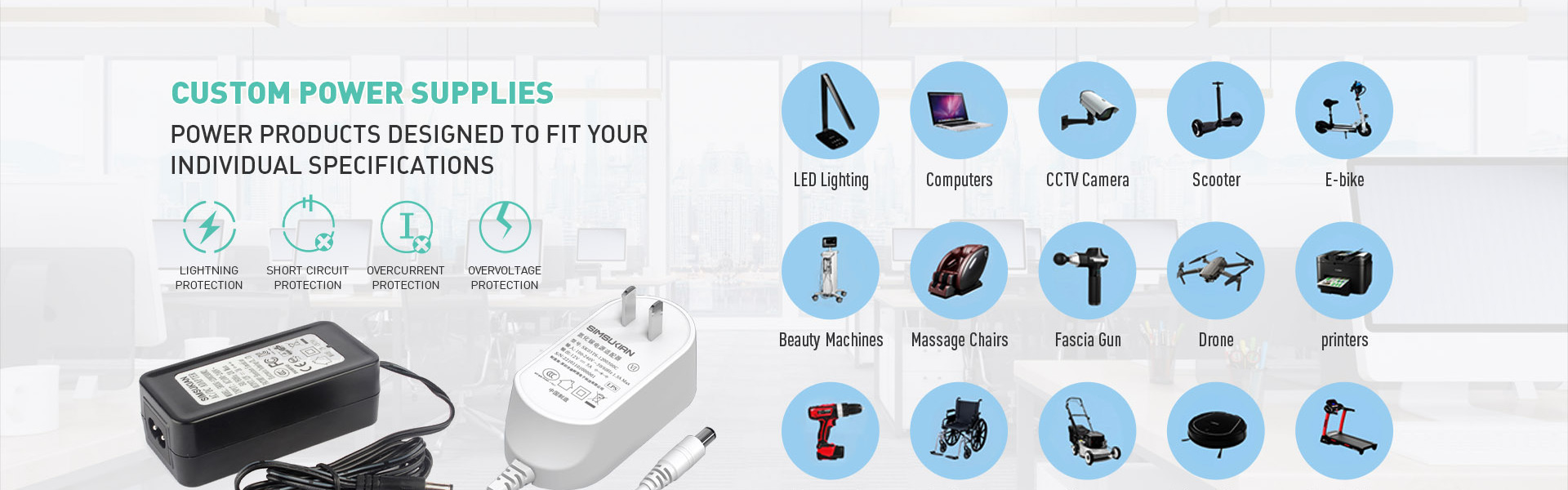
1. Generation Mechanism of Ripple and High-Frequency Noise for Charger
A Charger adopts switching power supply topology. Fast on/off switching of power devices creates periodic voltage fluctuation known as ripple. Switching events also generate high-frequency electrical noise superimposed on DC output.
Ripple originates from charging and discharging of output capacitors. High-frequency noise comes from voltage spikes during MOSFET switching. Output cable length and PCB trace layout of the Charger alter noise magnitude.
 Precision sensors and data acquisition mainboards are sensitive to voltage fluctuation. Excessive output noise from the Charger leaks into signal circuits, leading to data drift and communication dropouts. These intermittent faults are hard to reproduce in simple power-on tests and only emerge after field deployment. B-side projects face high troubleshooting cost once mass shipments are affected.
2. Standard Ripple & Noise Test for Charger
Testing output ripple and noise of the Charger requires a sufficient-bandwidth oscilloscope and dedicated probe. Follow industry standards, connect specified output cable and use probe ground ring to reduce external test interference.
 Capture waveforms under full, half and light load. Measure low-frequency periodic ripple and peak value of high-frequency noise spikes.
Run tests inside shielding environment to minimize grid interference and capture authentic output characteristics of the Charger. Many buyers only use ordinary multimeters. Multimeters read average DC voltage and cannot capture high-frequency noise, leading to wrong judgement of Charger quality.
Compare waveforms after testing and verify peak noise stays within end-device tolerance, rather than only checking nominal output voltage.
3. Circuit Solutions to Reduce Output Noise of Charger
Optimization of output noise of the Charger covers filter circuits, component selection and PCB layout.
First, add LC filter network at output with low-ESR solid capacitors to suppress high-frequency spikes and smooth voltage fluctuation. Ordinary electrolytic capacitors perform poorly for high-frequency filtering.
Second, select controller IC with quieter switching behavior and tune rise/fall edge to reduce voltage spikes during switching.
Third, shorten PCB power traces and reduce parasitic inductance, which amplifies switching noise and increases output spikes of the Charger.
Fourth, use shielded output cables for highly sensitive precision hardware to further reduce coupled noise.
Low-cost Charger often simplifies output filter circuits by removing capacitors and inductors, resulting in obvious noise rise under light load.
4. Noise Specification Selection of Charger for Different End Devices
1. Industrial sensors, high-precision test instruments: highest noise sensitivity, select low-noise Charger with strict spike limits.
2. IoT gateways, cameras: medium noise requirement, standard filter Charger works well.
3. General motor drive hardware: high tolerance to voltage noise, conventional Charger is acceptable.
At early project phase, hardware engineers define noise limits and write them into Charger datasheet. Request raw oscilloscope waveforms instead of only text parameters from suppliers.
5. Mass Production Control for Consistent Noise Performance
Lock output filter components of the Charger during mass production. Capacitor or inductor replacement changes filtering performance and shifts noise level. Any material modification requires ripple and noise re-testing.
 Sample every incoming batch and recheck output waveforms with oscilloscope to ensure noise matches validated samples. Archive waveform records for later fault tracing.
Conclusion
Output ripple and high-frequency noise of the Charger are common triggers for intermittent faults in precision hardware. DC voltage readings alone cannot judge output quality of the Charger. B-side buyers evaluating a Charger need oscilloscope waveform capture under multiple loads, set noise limits according to signal sensitivity of end hardware and optimize output filter circuits. Lock filter components in mass production to keep consistent noise performance. If you need low-noise Charger and ripple noise testing, Sen Shu Qiang designs filter circuits matching noise requirements and provides full oscilloscope waveform reports. Contact us for project discussion.
Power adapter
Power adapter
NewUpdates
Related Articles More>>
- Plug Compatibility Guide for Interchangeable Plug Power Adapter Across Global Markets
- Global Voltage Adaptability & Compliance Certification Guide for Genuine Chargers
- EMI EMC Test & Overseas Market Access Guide for Desktop Power Adapter
- Analysis of Temperature Rise, Heat Dissipation and Housing Material Selection for Wall-Plug Power Adapters