 (+035) 527-1710-70
 NEWSLETTER


Chargers for skin-contact personal care devices must meet higher design standards than regular power adapters. Many personal care devices operate on sensitive areas of the body. They include facial massagers, hair removal tools, scalp therapy systems, and home-use beauty instruments. Because these devices touch the skin directly, their chargers must deliver stable power with very low noise and minimal heat. Otherwise, users may face discomfort, performance issues, or safety risks.
However, designing a low-noise and low-heat charger is complex. It requires expertise in circuit topology, materials, thermal engineering, noise suppression, and safety compliance. As personal care technology advances, engineers must balance compact size, quiet operation, and strict thermal control. Therefore, the development of reliable chargers for skin-contact personal care devices involves an integrated engineering strategy. It must consider every stage from circuit layout to long-term durability.
This article examines the essential principles behind low-noise and low-heat charger design. It explains how engineers reduce energy loss, suppress noise, and control heat. It also discusses safety logic, charging stability, component selection, and protection layers. The goal is to reveal how high-quality power engineering ensures safe and comfortable use of personal care devices in daily life.
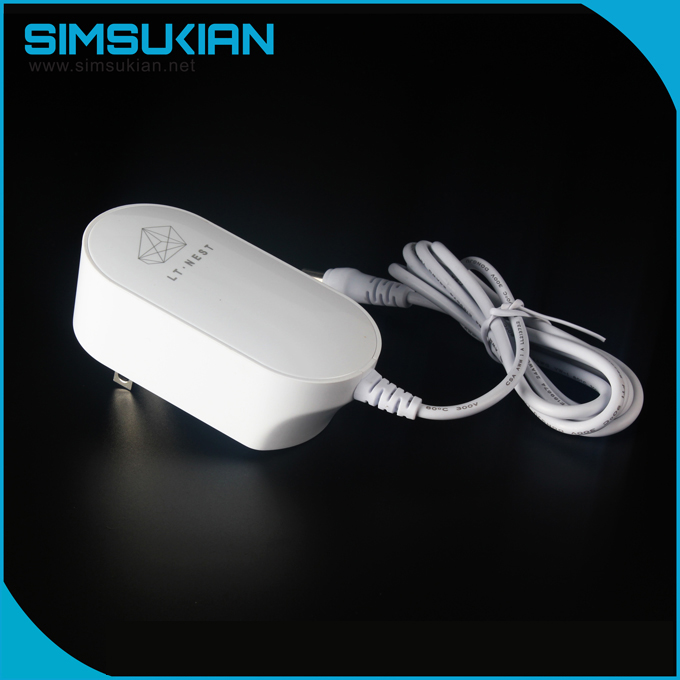 Why Skin-Contact Personal Care Devices Need Special Charger Engineering
Skin-contact devices interact with delicate tissues. They operate near the face, scalp, or sensitive areas. Therefore, the charger must deliver extremely stable and clean power. When power fluctuates, the device may vibrate unpredictably or produce sudden heat spikes. These issues can cause discomfort and shorten device lifespan.
Many personal care devices also run in quiet environments. Users expect silent operation. Because of this, chargers must avoid audible noise during charging. Coil whine, switching noise, and ripple-induced vibration all harm user experience.
More importantly, heat poses a greater challenge. Poor thermal control can warm the device housing. Even a mild temperature rise may concern users. Skin-contact personal care chargers must therefore generate as little heat as possible. This requires high-efficiency conversion, optimized thermal paths, and low-loss components.
Because these devices often charge on bathroom counters or bedside tables, the charger must also meet strict waterproofing, insulation, and leakage current standards. This ensures safety in moisture-rich environments.
As the market grows, regulators have increased safety requirements. Medical-grade certifications influence some personal care sectors. Designers must follow global standards for EMC, thermal protection, and electrical isolation. These factors make charger engineering more demanding than for common electronics.
Circuit Topology: The Foundation of Low-Noise, Low-Heat Charger Behavior
The internal circuit structure determines noise level and heat generation. Chargers for skin-contact personal care devices often employ refined switching topologies. They prioritize efficiency and noise suppression over raw power output.
High-Efficiency Switching Strategy
Switching converters generates heat when energy drops across components. Therefore, engineers reduce switching losses by using advanced semiconductor materials. Fast-recovery diodes, low-RDS(on) MOSFETs, and optimized switching frequencies all reduce waste.
When switching losses drop, heat decreases. Because heat reduction correlates with stable performance, engineers adjust the operating frequency carefully. Too high a frequency increases switching noise. Too low a frequency increases coil vibration and ripple. Balanced frequency strategies support both silence and safety.
PCB Layout Controls Noise and Heat
Even with strong components, layout errors cause heat. Poor trace routing increases resistance. Long traces induce noise through parasitic effects. Chargers for skin-contact personal care devices require tight, symmetrical layouts with short loops.
Moreover, designers separate high-frequency and low-frequency zones. This separation reduces interference. It also isolates heat sources from sensitive components. Good layout also reduces EMI, which lowers audible noise.
Magnetic Components Shape Acoustic Noise
Coils generate magnetic vibration. This vibration becomes coil whine. Engineers solve this by using high-strength ferrite cores and resin-filled inductors. These materials reduce movement inside the coil. Because vibration decreases, noise drops.
Moreover, improved core geometry reduces heat. Heat reduction further enhances long-term reliability, especially for chargers stored in warm bathrooms.

Thermal Engineering: Keeping Heat Away From the Device and the User
Low-heat charger engineering requires an integrated thermal approach. Because every component releases some heat, the design must manage the temperature path and dissipation speed.
High-Efficiency Conversion Reduces Heat at the Source
The best way to reduce heat is to waste less energy. Efficiency often rises above 88% in advanced chargers. Some premium personal care chargers reach 92%. Higher efficiency means less heat generation. This reduces the temperature rise in the device and the adapter shell.
Heat-Spreading Architecture Supports Stability
Engineers design internal metal plates to spread heat. These plates guide heat from hotspots to larger surfaces. Because heat spreads evenly, no single point becomes excessively warm. This protects PCBs and maintains a stable output.
Smart Thermal Protection Prevents Overheating
Chargers for skin-contact personal care devices also include thermal protection sensors. These sensors detect temperature rise early. When the temperature exceeds limits, the charger lowers output or pauses charging. This protects both the user and the device.
Smart chips record thermal cycles. They track long-term temperature patterns. This helps prevent gradual overheating due to aging components.
Flame-Retardant and Heat-Stable Materials Add Safety
The housing must resist heat without deforming. Flame-retardant plastics maintain shape under long-term use. Heat-resistant insulation supports stable isolation and prevents internal arc faults.
These material decisions reduce risk, especially in bathrooms or humid environments where thermal stress combines with moisture exposure.
Noise Reduction: Achieving Silent Charging in Sensitive Environments
Noise control is essential for skin-contact personal care devices. Quiet environments amplify sound. Even a small switching noise can irritate users. Chargers, therefore, adopt multiple noise-reduction strategies.
Precision Frequency Control Decreases Audible Noise
Noise often occurs when the switching frequency enters the human hearing range. Engineers adjust frequency to stay outside this range. They also apply frequency dithering to prevent tonal noise. This lowers audible peaks.
Ripple Suppression Creates Stable Operation
Ripple causes vibration in the device motor or PCB. To prevent this, chargers use premium capacitors. Low-ESR electrolytic capacitors and multilayer ceramic capacitors reduce ripple significantly.
Stable ripple control ensures the device operates smoothly. It also protects sensitive components near the skin.
EMC Shielding Improves Quietness
Metal shielding protects circuits from electromagnetic noise. It also prevents the charger from spreading interference to nearby beauty devices. This is essential in home settings where multiple personal care tools operate together.
Shielding layers also reduce coil whine and switching hiss. These improvements create silent charging sessions for users.
 Safety Engineering for Skin-Contact Personal Care Chargers
Safety is central to charger design. Skin-contact devices require additional protection because they interact with moisture, oils, and delicate skin.
Isolation Prevents Electrical Leakage
Chargers must deliver absolute insulation. Engineers use reinforced isolation transformers and high-grade insulation barriers. These barriers reduce leakage current to very low levels. This ensures safe charging even near water.
Multi-Layer Protection Logic
Protection features include:
-
short-circuit protection
-
over-current control
-
over-voltage correction
-
temperature cutoff
-
surge suppression
These systems work together. They prevent harsh electrical events from reaching the user.
Compliance With Global Safety Standards
High-quality chargers meet EN, UL, FCC, CE, and IEC standards. Some also meet medical-grade classifications depending on device category.
Compliance ensures consistent performance across different regions. It also improves user trust and device lifetime.
Material Science Enhances Thermal and Acoustic Performance
Material decisions affect heat flow and noise level. Even small choices change the final behavior of the charger.
High-Conductivity Metals Improve Heat Transfer
Copper and aluminum improve thermal spreading. Thick copper layers in PCBs reduce internal resistance. Aluminum heat plates disperse heat quickly. These metals also lower electrical losses.
Soft Magnetic Cores Reduce Noise
Ferrite cores with optimized permeability reduce magnetic vibration. Combined with resin filling, these cores significantly reduce humming noise.
Silicone-Based Insulation Improves Stability
Silicone insulation supports high temperature cycles. It resists moisture. It also prevents arc tracking. Because of this, it is ideal for chargers used near bathrooms or humid dressing rooms.
Intelligent Charging Algorithms Improve Device Comfort and Battery Life
Chargers for skin-contact personal care devices often integrate intelligent charging logic. This improves comfort and extends battery health.
Constant-Voltage and Constant-Current Control
Smooth transitions between charging modes reduce stress on the battery. They also prevent surface warming on the device.
Adaptive Charging Adjusts Output in Real Time
The charger detects device temperature and battery state. It adjusts power delivery. This avoids overheating during long sessions.
Low-Noise Output Waveforms Improve Stability
Clean output waveforms reduce internal vibration in motor-driven personal care tools. They also improve the comfort of skin-contact procedures.
Durability and Long-Term Reliability in Daily Personal Care Scenarios
Users may charge personal care devices daily. This requires exceptional durability.
Moisture-Resistant Construction
Sealed housings and conformal coatings protect internal circuits. These features maintain long-term safety even in bathrooms.
Stress-Resistant Components
Chargers must resist drops, cable pulls, and daily wear. Reinforced joints and flexible cables extend the lifetime.
Stable Output Over Aging
Premium components maintain stable output even after thousands of hours. This improves device reliability and prevents performance loss.
Final Summary: The Structural Logic Behind Low-Noise, Low-Heat Chargers
The engineering behind chargers for skin-contact personal care devices combines many layers. Quiet operation, low heat, stable output, and reliable insulation all require precise design. Engineers must control switching behavior, manage thermal paths, select advanced materials, and ensure strict safety logic. They must also optimize electromagnetic performance and long-term durability.
Although these chargers seem simple, they reflect complex power engineering. A well-designed charger protects the user, preserves device comfort, and extends device lifespan. It also supports stable performance across quiet environments and daily routines.
In the end, a low-noise, low-heat charger is not defined by one feature. It emerges from an integrated system of materials, circuits, safety protections, and thermal architecture. This system ensures that personal care devices remain safe, quiet, and comfortable for every user.