

Article Summary
From pin to PCB, a wall plug power adapter hides failure modes most buyers never see. This guide explains the technical parameters and specifications behind pin durability, heat trapping, output stability and regional certification so engineers can specify a wall plug power adapter that survives years of wall-mounted service.
The Pin Is the First Thing That Breaks
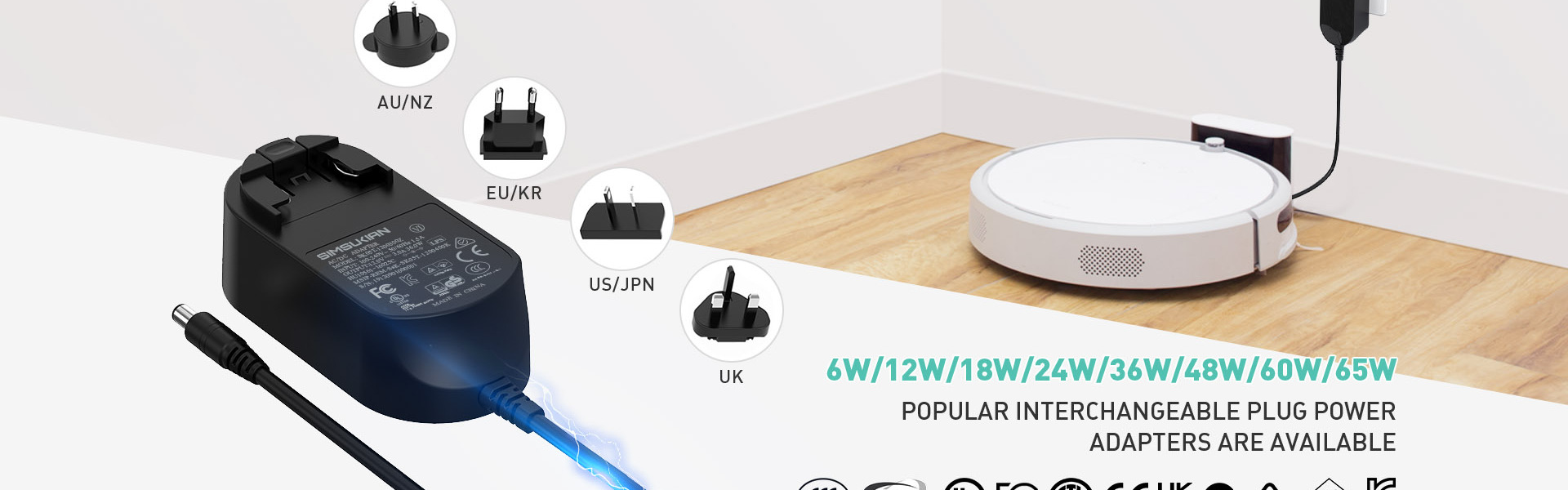
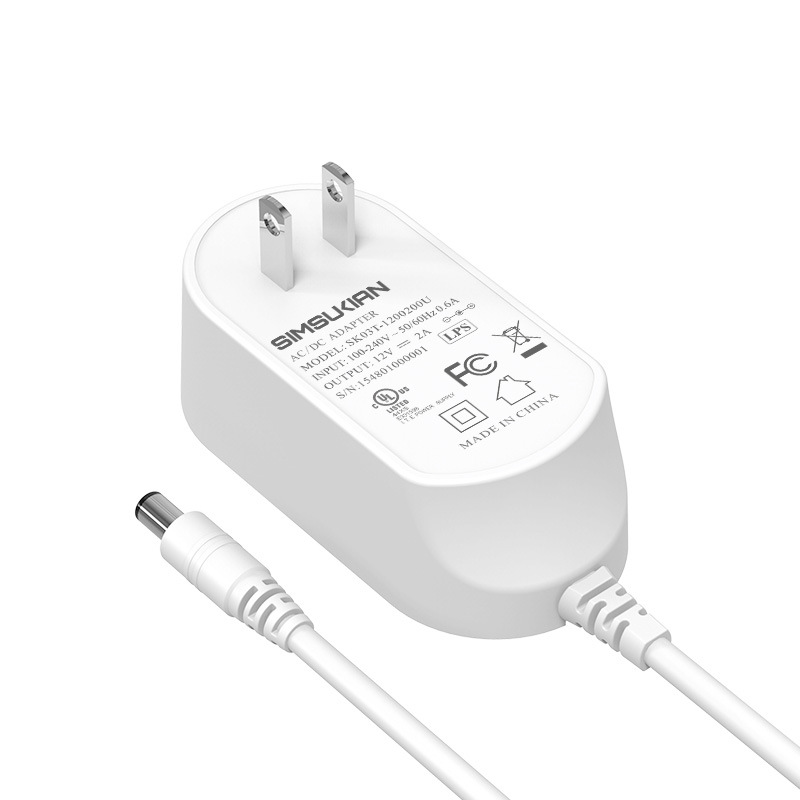
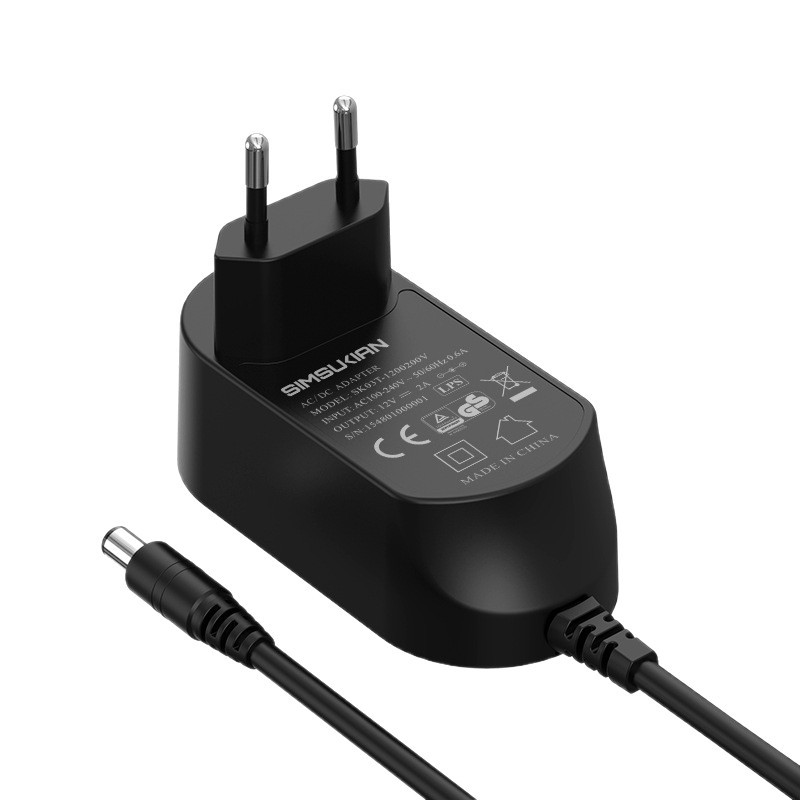
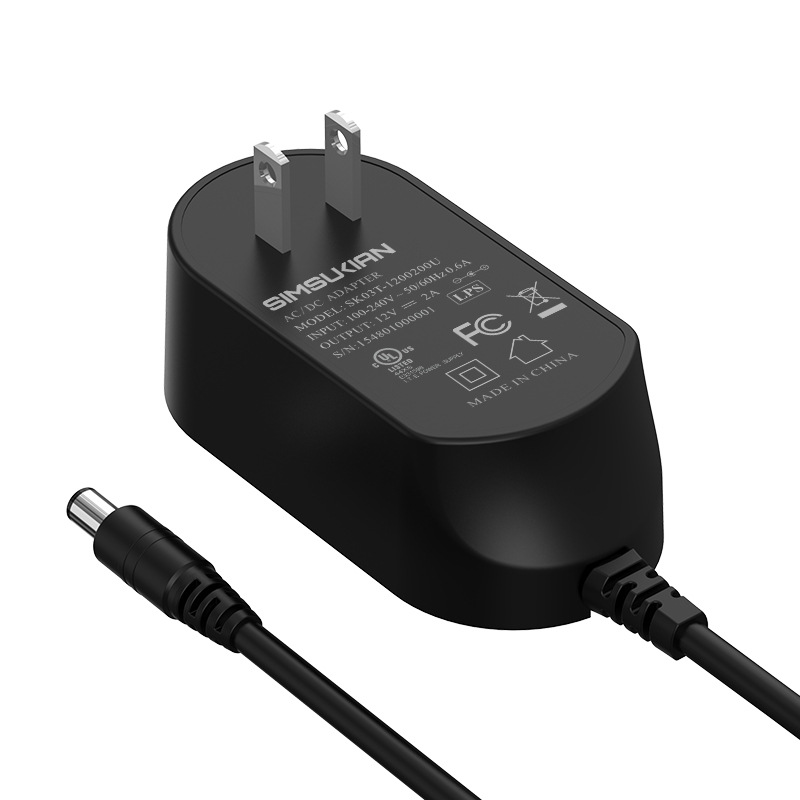
Most people think a wall plug power adapter fails because of electronics. In the field, the AC pins often fail first. Type G pins carry real mass and lever against the wall plate on every insertion. Type A/B blades rely on spring tension after thousands of cycles. Type I flat pins bend if the housing tilts under load. A wall plug power adapter with cheap plating loses contact resistance control fast — once resistance climbs past 50 mΩ, the pin heats, the plastic softens and the unit wobbles in the socket.
Good pin systems use nickel-plated brass, phosphor bronze or hard-drawn copper. Folding-pin versions must pass 5 000 to 10 000 open-close cycles. A wall plug power adapter rated for global deployment should document axial pin retention at 40 N to 80 N, not just claim "standard compliant."
What the PCB Is Really Fighting
Inside the shell, a wall plug power adapter is a sealed thermal box. No fan, no baseplate, no external heatsink. At 40 °C ambient and full load, junction temperature on the primary switcher sits at 110 °C to 125 °C. The technical parameters and specifications on the label never show this number, but it decides product life.
Capacitor grade matters more than marketing wattage. A wall plug power adapter built with 105 °C low-ESR electrolytics behaves completely differently from one built with 85 °C parts. Every 10 °C above rated temperature roughly halves electrolytic life. Polymer secondary caps and thermal pads bonded to the inner wall change field return rates more than a 2% efficiency bump.
Output Stability Under Pulsed Loads
Routers, STBs and sensor gateways do not draw steady current. A wall plug power adapter that looks fine on a resistive load bank can sag or reset the host under real traffic. Recovery to within ±5% of nominal after a 50% to 100% load step should land in 200 µs to 500 µs. Ripple on 5 V rails should stay at or below 75 mVp-p; 12 V to 24 V rails at or below 100 mVp-p measured with a 20 MHz bandwidth-limited probe. A wall plug power adapter feeding a Wi-Fi SoC cannot afford sloppy transient response — noise becomes dropped packets and ghost reboots.
Hold-up time is the silent spec. A unit with 16 ms or more keeps a router alive through sub-20 ms grid blinks. A wall plug power adapter with 8 ms hold-up may reboot the network every time a motor starts nearby.
EMC and Certification Are Not Optional
Because the case sits inches from antennas, a wall plug power adapter fights EMC from inside the wall. EN 55032 Class B is the bar. IEC 61000-4-2 ESD, 61000-4-4 EFT and 61000-4-5 surge define real-world behavior. Units with thin Y-caps or missing common-mode chokes pass the bench and fail the port.
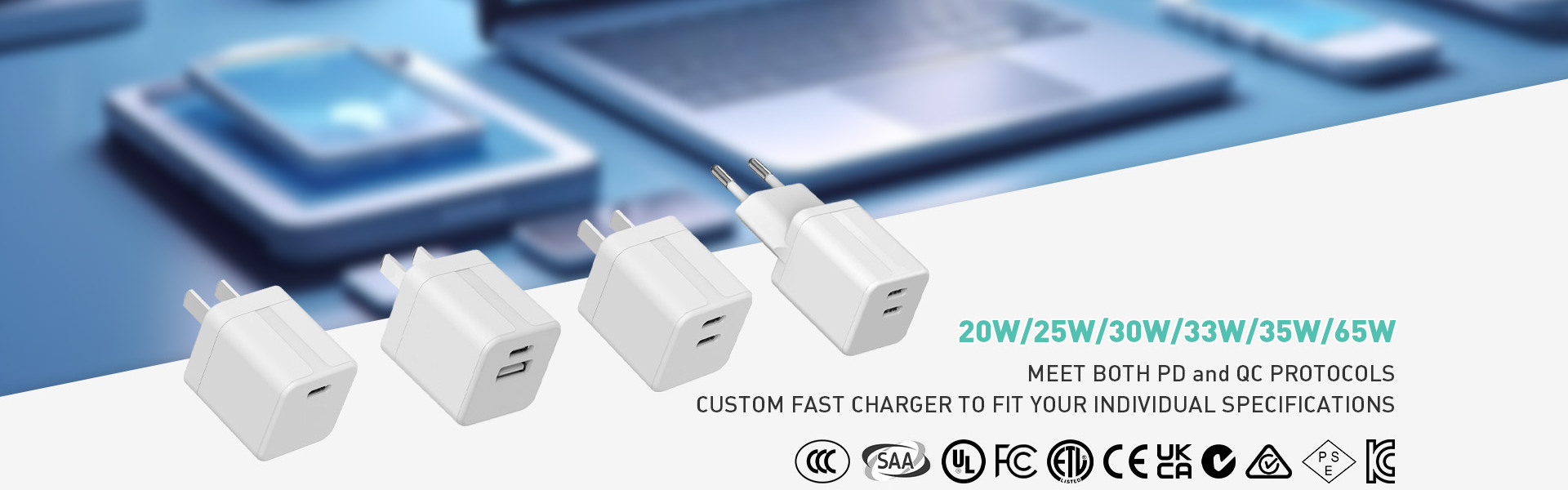
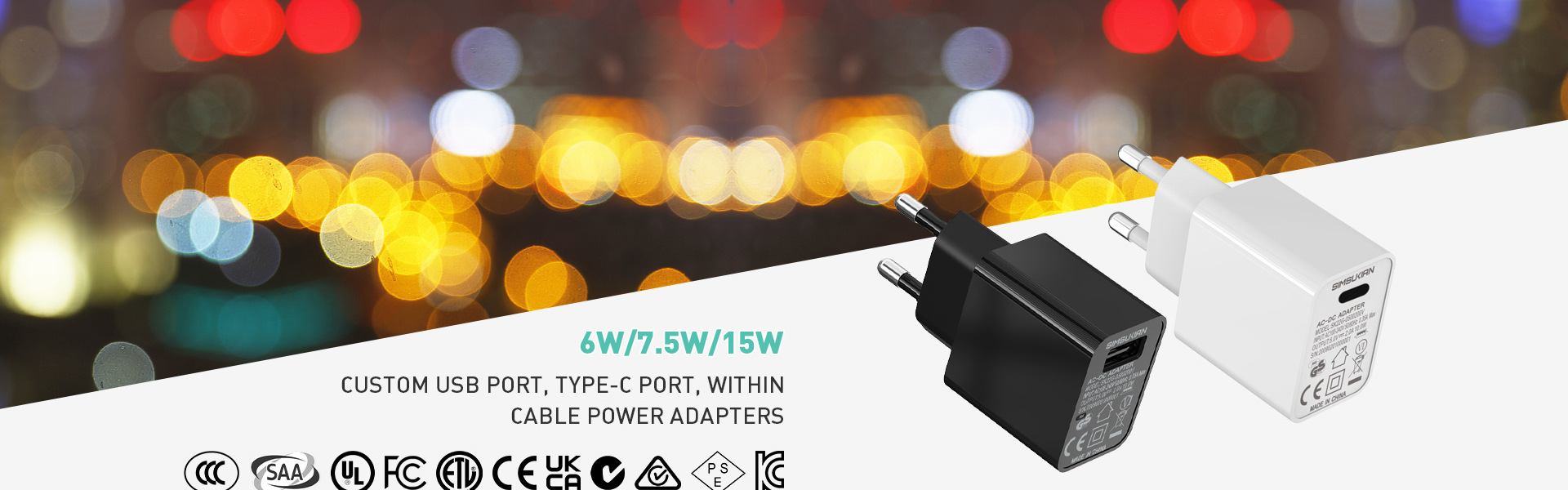
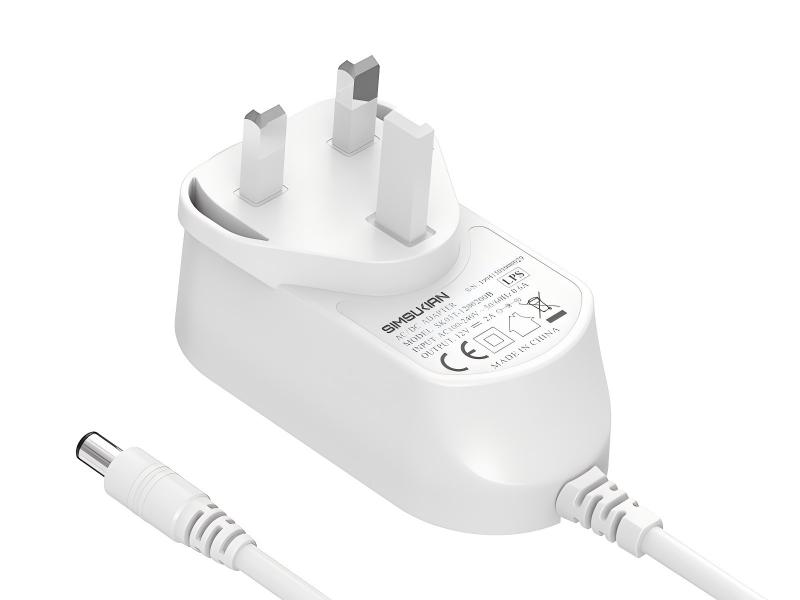
IEC 62368-1 is the safety baseline, but a wall plug power adapter is not "done" with one certificate. North America wants UL 62368-1 or ETL plus FCC Part 15B. The EU wants CE LVD, EMC, RoHS and ErP. The UK wants UKCA. Japan wants PSE, Korea KC, Australia RCM, India BIS. Changing the pin plate or housing can invalidate the file. A wall plug power adapter with slide-on pins still needs the pin plate certified as part of the assembly.
Altitude and Humidity
At 2 000 m to 4 000 m, air breaks down easier. A wall plug power adapter specified only at sea level may arc internally in high-elevation markets. Pollution degree 2 spacing and coated PCBA are not luxury options — they separate silent operation from returned cartons. Storage at 80% RH can cause surface leakage if housing seams are poorly welded, a detail the technical parameters and specifications sheet rarely mentions.
Conclusion
A wall plug power adapter is not a smaller desktop unit. It is a pin-mechanics, thermal-collapse, EMC and certification problem wearing a 5 W to 65 W label. Specifying on volts and amps alone is why teams keep buying the same failure twice.
If your team is specifying a wall plug power adapter for global deployment and needs help navigating pin durability, thermal design, pulsed-load stability or multi-region certification, Simsukian provides engineering review, sample builds and compliance support tailored to your application. Reach out to Simsukian to discuss your requirements.
Sources
1.IEC. Audio/video, information and communication technology equipment — Part 1: Safety requirements (IEC 62368-1).
2.CENELEC. EN 55032 — Electromagnetic compatibility of multimedia equipment and EU ErP Regulation (EC) 2019/1782. and
3.UL. Standard for Safety for Audio/Video, Information and Communication Technology Equipment (UL 62368-1).
Power adapter
Power adapter
Related Articles More>>
- PD GaN Fast Charger - PD3.2 Communication Protocol and PPS Voltage Regulation Technical Parameters
- Wall Plug Power Adapter - Power Selection, Burn-in Test and IoT Supporting Technical Parameters
- 20W PD GaN Fast Charger Industry Advantages & B2B Procurement Compliance Guide
- PD GaN fast charger Energy-saving Technology and Global Energy Compliance Advantages