

Abstract
When products are exported, power adapters are required to meet the full set of certification requirements for safety, energy efficiency and EMC in target markets. Certification systems, test laboratories and certificate validity periods vary from country to country. For custom-developed power adapters, consistency must be controlled throughout the whole process from requirement intake, sample development, pilot production to mass production. Certification documents and BOM change control for power adapters are easily overlooked links in overseas projects.
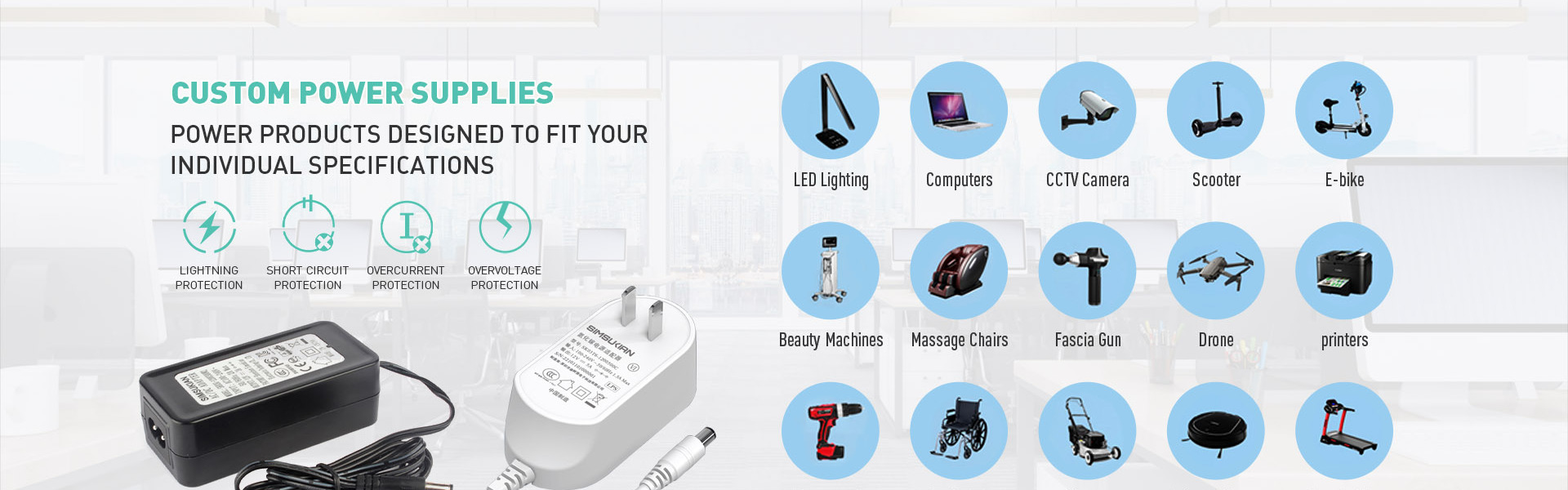
Shenzhen Senshuqiang Electronics Technology Co., Ltd. is familiar with mainstream global certification systems and supports certification packages including CCC, CE, FCC, KC, UKCA, PSE and CB. The company sorts out certification matrices, customized development milestones and mass production control methods to reduce risks such as certification hold-ups and batch inconsistency for overseas projects.
1. Certification Matrix for Mainstream Countries and Regions: Classification of Safety, EMC and Energy Efficiency
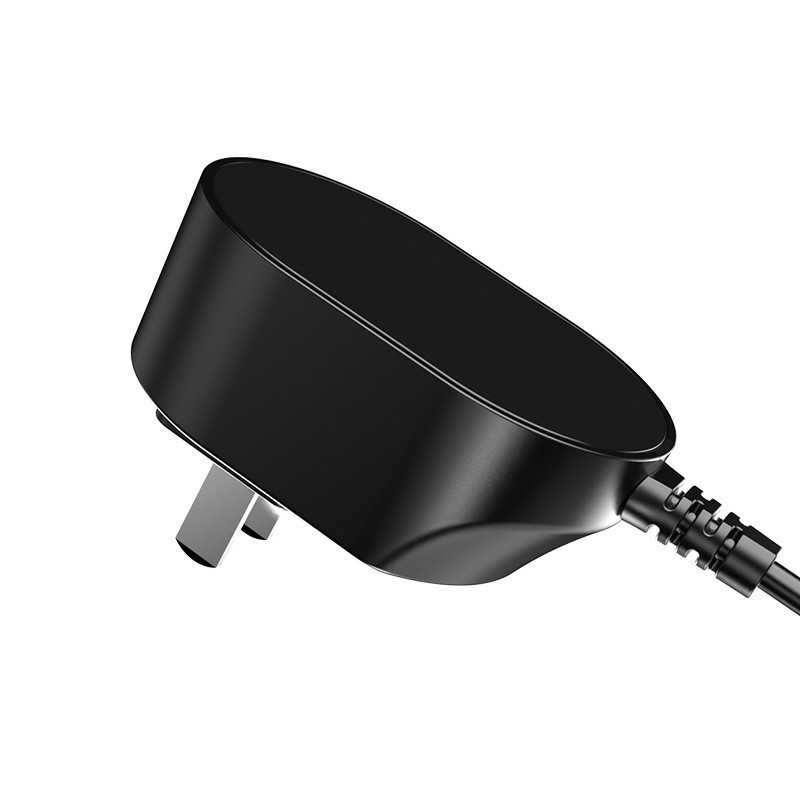
The CB certificate serves as a foundational mutual-recognition certificate. With a CB test report, local certificates for multiple countries can be converted, shortening the certification cycle. CE covers LVD safety and EMC electromagnetic compatibility; FCC regulates electromagnetic compatibility for the North American market; KC is the mandatory certification for South Korea; UKCA applies to the UK market; PSE is mandatory for Japan and divided into diamond-marked and circle-marked types; CCC is required for domestic sales in China.
Energy efficiency certifications are independent of safety certifications. Schemes including DoE, ErP, GEMS and CEC require separate applications. A complete document package for exported power adapters consists of safety certificates, EMC reports, energy efficiency reports and nameplate files. Nameplates shall comply with local language and marking requirements, with input/output specifications, manufacturer information and warning statements fully included.
Certification lead times differ by scheme. CB-to-KC conversion generally takes 3–4 weeks; CE-LVD + EMC takes approximately 2 weeks after internal pre-testing and sample submission. If B-end customers target multiple markets simultaneously, CB certification shall be initiated with priority. Certification schedules shall be planned in advance for B-end projects, and sufficient lead time for certificate acquisition shall be reserved for B-end orders to avoid shipment hold-up due to unavailable certificates upon production completion.
2. Custom Development Requirement Checklist: Defining Boundary Conditions for Power Adapters
Custom development starts with collecting a complete requirement checklist, rather than only the output voltage and power. Required information includes: input voltage range (90–264VAC wide voltage / fixed voltage), output voltage and current tolerance, ripple limit, protection functions (over-voltage, over-current, short-circuit, over-temperature), operating temperature range, structural dimensions, plug type and IP protection rating, together with the list of required certifications.
Protection parameters are the core of customization. The over-voltage protection threshold is normally set at 115%–130% of the rated output voltage; the over-current protection threshold is defined based on peak load; short-circuit protection supports two optional modes: auto-recovery or latch-off. The protection logic of the power adapter must match the back-end main control device; mismatched protection logic may cause abnormal restarts of the complete equipment.
After requirement confirmation, a specification sheet will be issued and signed by both parties as the acceptance basis for subsequent sampling, pilot run and mass production. Specification changes shall follow the change control process, with an assessment on whether certification updates are needed. The Senshuqiang project team provides customized specification sheets, schematic diagrams and BOM lists for customer confirmation.
3. Mass Production Consistency Control: BOM Locking, Process Control and Outgoing Sampling Inspection
The core of mass production consistency is BOM locking. Key components listed in certificates cannot be replaced arbitrarily. Capacitors, transformers, optocouplers and switching transistors are critical certified components. Any change of model or supplier requires notification to the test laboratory and certificate amendment. Direct material replacement without prior notification will invalidate the certificates and lead to detention risks during customs clearance.
Production process control: Reflow profiles for SMT assembly are fixed; soldering temperature and duration for through-hole assembly are standardized. Anti-error fixtures are deployed on power adapter assembly lines to prevent reversed plug mounting and housing damage. Outgoing sampling plan: 2% of samples from each batch are selected for full-function tests, including hipot insulation test, output accuracy verification and protection function check, with test records retained for every batch.
Output voltage deviation between different batches is controlled within ±2%, and ripple fluctuation within ±10mV. Periodic audit tests are carried out during mass production to verify whether processes deviate from established standards.
4. Nameplate, Packaging and Document Support for Overseas Customs Clearance
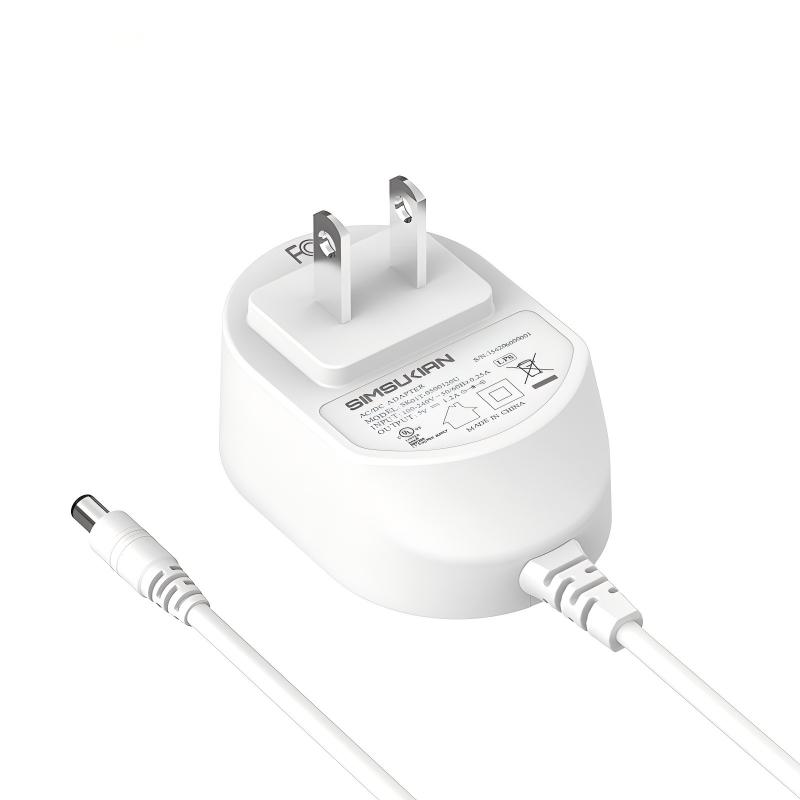
Nameplate printing materials shall be temperature-resistant and abrasion-resistant to avoid blurred marking after long-term operation. English is the primary language on nameplates for export products, while local languages are required for certain regions. Outer cartons shall be marked with model number, quantity, manufacturer information and country of origin. Customs authorities may conduct random checks to verify consistency between certificates and physical samples; the model number, nameplate information and certificate model must be fully identical.
Many overseas shipments are detained at ports due to incorrect nameplate parameters or mismatched model information between certificates and delivered goods. Prior to shipment, the documentation team verifies consistency across certificates, nameplates and specification sheets for power adapters.
Conclusion
Shenzhen Senshuqiang Electronics Technology Co., Ltd. provides full-process overseas compliance support for custom power adapters, covering certification planning, specification confirmation, sample development, mass production consistency control, together with complete certification documents and outgoing test records. Building a rational certification matrix, locking requirement boundaries in advance, and strictly controlling BOM changes and process standards ensure stable and compliant delivered products suitable for export business across multiple countries and regions.
FAQ
Q1: What is the value of a CB certificate? ① A CB certificate can be used to convert local certificates for multiple countries and shorten the certification cycle for other regions.
Q2: What needs to be confirmed first for custom development? ① Collect a complete requirement checklist and issue a specification sheet confirmed by both parties.
Q3: What is the conventional setting range for the over-voltage protection threshold of a power adapter? ① Normally set at 115%–130% of the rated output voltage.
Q4: Can key certified components be replaced directly? ① No. Replacement of key components requires notification to the laboratory and completion of certificate amendment.
Q5: What is the sampling ratio for outgoing inspection per batch? ① 2% of samples from each batch are selected for full-function outgoing tests.
References: IECEE CB Scheme Rules, Official Certification Guidelines for UKCA/FCC/KC, Senshuqiang Custom Power Project Control Specifications
If you need customized power adapters with synchronized certification planning for multi-country export, please contact Shenzhen Senshuqiang Electronics Technology Co., Ltd. to evaluate your project requirements.
Power adapter
Power adapter
Related Articles More>>
- Guide to Output Voltage Level Matching and Choosing a desktop power adapter
- Convertible Plug Power Adapter - Electrical Consistency Technical Parameters Across Different Pin Versions
- Creepage and PCB Layout Technical Parameters of wall plug power adapter
- Wide Input and Global Grid Compatibility Technical Parameters of power adapter