

Abstract
Buyers often focus only on voltage accuracy and rated current while overlooking ripple performance of a desktop power adapter. Noise of a desktop power adapter is affected by switching components, loop compensation, cable impedance and grounding layout. Test bandwidth, probe setup and load rules differ across standards, so direct comparison of ripple values from suppliers can be misleading. Measurements should be taken both at the adapter output and the device PCB to separate noise from the cable and connectors.
1. Classification of Ripple and Noise Sources
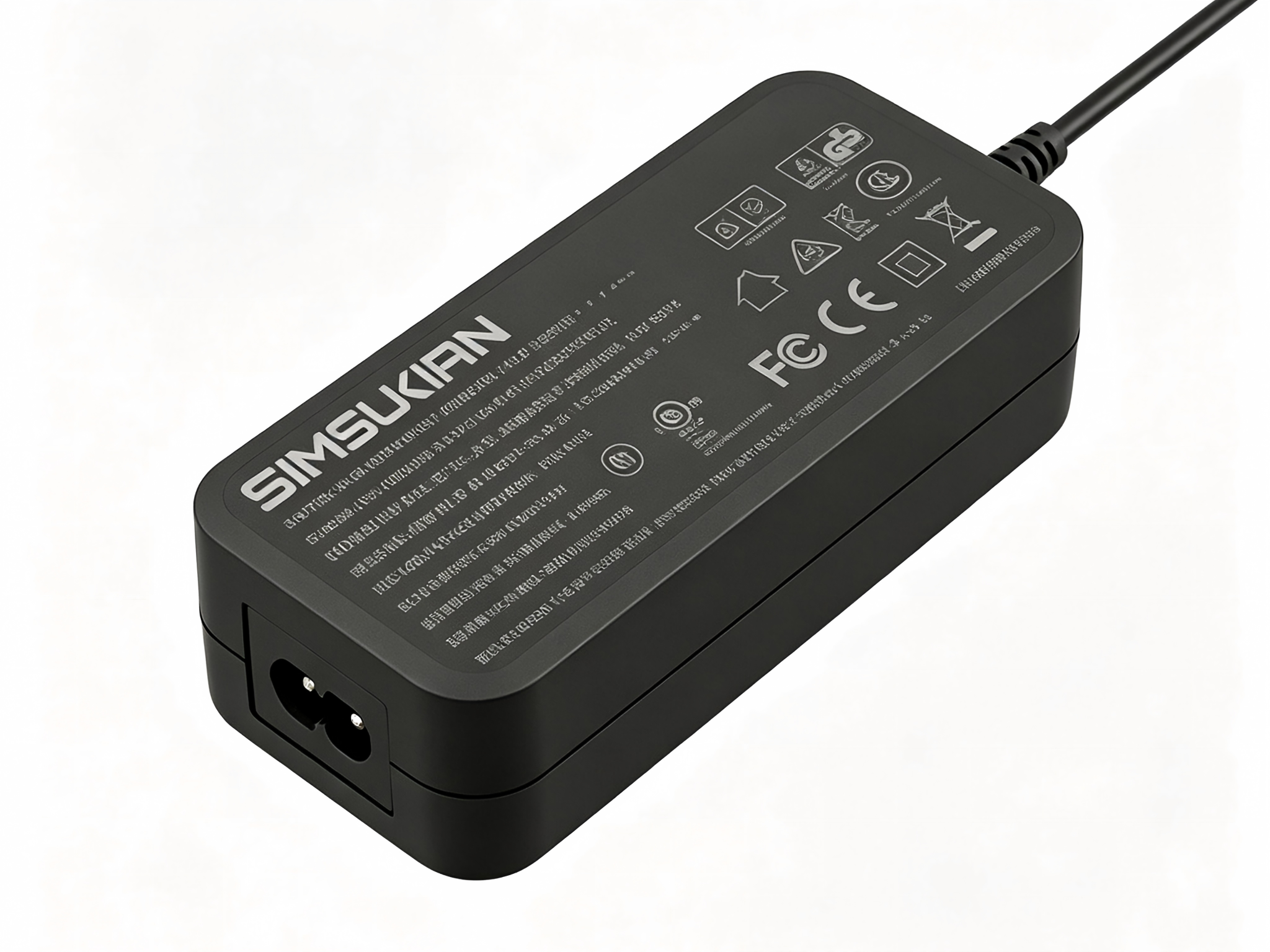
Low-frequency ripple of a desktop power adapter comes from mains rectification and can be suppressed by active PFC. Mid-band noise arises from switching energy pulsation, while high-frequency noise is caused by fast dv/dt and di/dt transitions. Long output cables amplify noise and voltage spikes under dynamic load changes. Medical and sensing equipment usually require much tighter ripple limits than consumer products. Test settings including probe bandwidth and oscilloscope scale must be recorded to avoid biased readings.
2. Trade-offs in Feedback Loop Compensation
The secondary feedback loop of a desktop power adapter controls load regulation and transient performance. Too high bandwidth amplifies high-frequency noise; too low bandwidth results in large overshoot and droop during load steps. Type II / Type III compensation is tuned to secure sufficient phase and gain margin. When adding LC filters, resonant poles must be kept away from the crossover frequency to prevent light-load oscillation. Near-field probing identifies whether noise originates from transformer leakage flux or switching node coupling, guiding shielding, snubber or filter adjustments instead of blind component stacking.
3. Output Filter Network and Layout
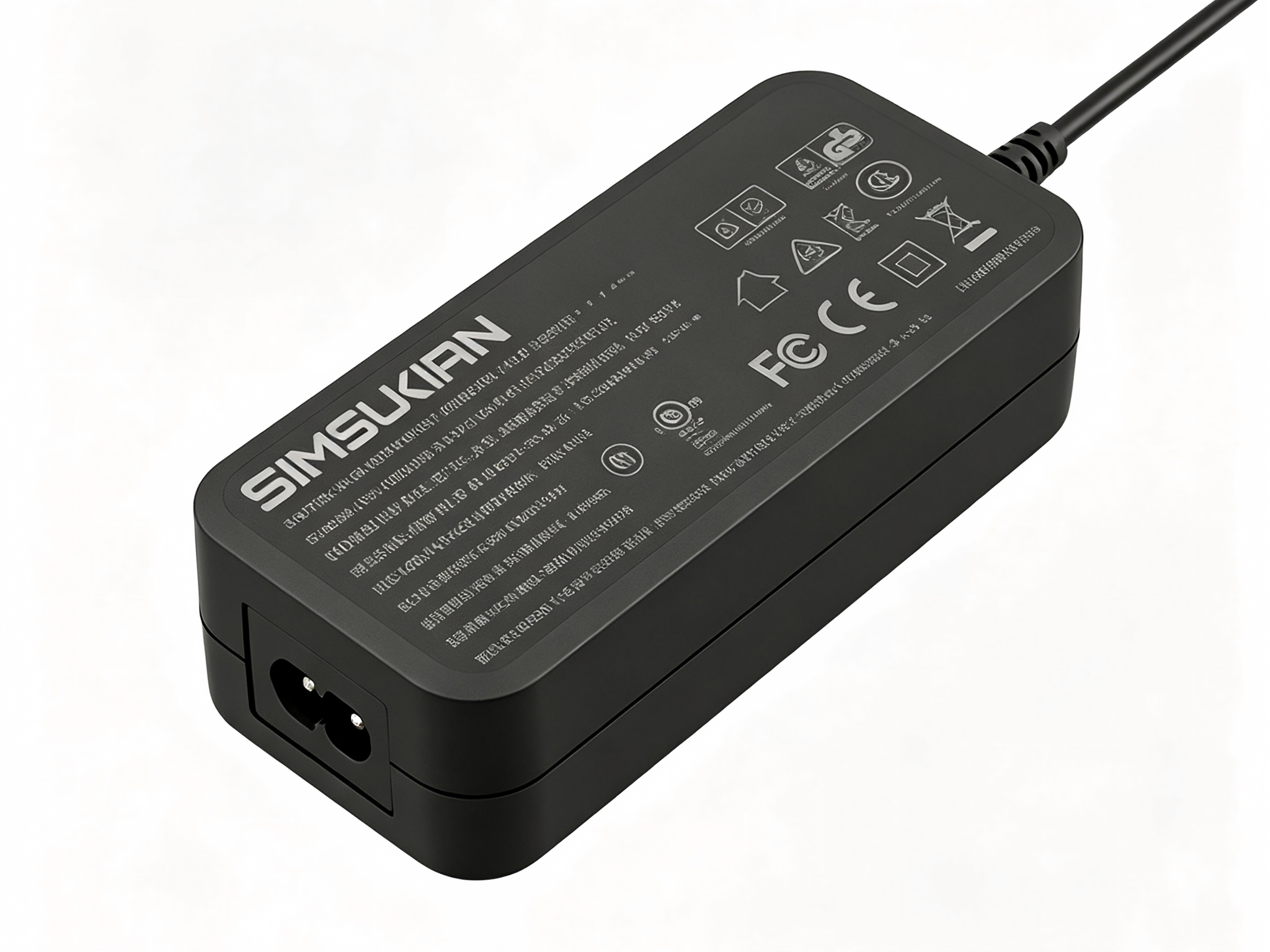
A standard desktop power adapter combines electrolytic capacitors and MLCCs: electrolytics handle low-frequency ripple while ceramic capacitors suppress high-frequency switching noise. Low-ESR capacitors are selected for low-noise variants. Filter capacitors should be placed close to the rectifier to minimize high di/dt loops. A second-stage LC filter improves noise but adds cost, size and phase lag and needs joint confirmation with the system manufacturer. Uniform criteria for load-step recovery time are required; inconsistent definitions lead to conflicting test results between laboratories.
4. Standardized Test Methodology
Ripple testing for a desktop power adapter uses a 20 MHz bandwidth limit, twisted-pair probe and specified termination capacitors. Validation covers full, half and light load plus dynamic load steps. Suppliers publishing only half-load ripple data may have poor noise performance under light or transient conditions. Capacitance does not reduce all noise linearly: larger capacitance helps low-frequency ripple, while high-frequency suppression relies heavily on MLCC placement and compact loop layout.
5. Alignment with System Noise Budget
The noise specification of a desktop power adapter must match the terminal system signal chain. Ripple may degrade ADC resolution or increase communication jitter and bit errors. The overall noise budget should be split between the power supply and interconnects, with agreed test points to avoid “adapter passes, board fails” conflicts.
Conclusion
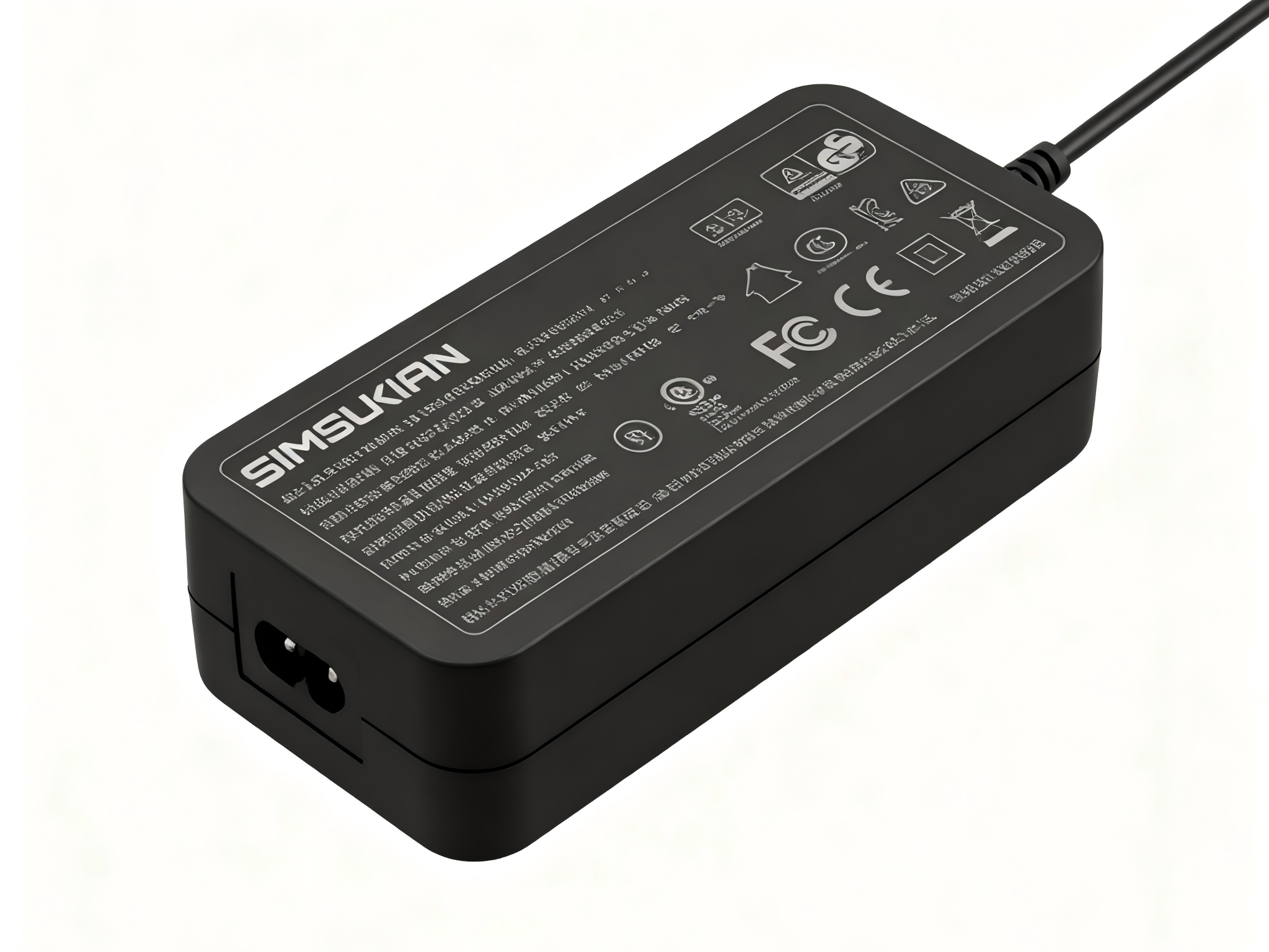
Noise is a system-level result determined by topology, compensation, filtering, cabling and test conditions. Agree on test standards, load conditions and acceptance criteria for ripple, transient and load regulation upfront. This prevents hidden interference after mass deployment even if bench samples pass. For your low-noise desktop power adapter development and validation needs, please contact SIMSUKIAN.
FAQ
Q1: Are the certifications complete and verifiable?
A1: Simsukian’s full product range covers major certifications including UL, CE, FCC, PSE, KC, SAA, UKCA, and CB. All certificates can be verified through official channels, effectively avoiding risks of fake, borrowed, or expired certificates that may cause customs clearance failure or platform delisting.
Q2: How is the quality stability and protection performance?
A2: All Simsukian products undergo 100% aging tests and are equipped with multiple protections including over-voltage, over-current, short-circuit, and over-temperature protection. They feature low ripple, low heat generation, and an average lifespan of approximately 50,000 hours, supporting long-term full-load stable operation.
Q3: Can products be customized? What are the sample and mass production lead times?
A3: OEM/ODM customization is fully supported, including voltage, current, connector, plug type, housing, and logo. Sample lead time is 5 days. Standard bulk order lead time is 20-25 days. Sample fees are refundable after placing a bulk order.
Q4: Do the products meet energy efficiency and standby power requirements?
A4: The full range meets DOE Level VI and higher energy efficiency standards. Some models achieve no-load power consumption ≤0.1W, complying with ErP and other international energy-saving regulations.
Q5: How are lead time, MOQ, and after-sales service guaranteed?
A5: As a source manufacturer with abundant stock of standard models, delivery is stable. Standard warranty is 1 year (free repair within the first year). Lifetime repair support is provided; after the first year, appropriate material and labor fees will be charged.
References
1. SIMSUKIAN official website
2. IEC 62368-1 Audio/video, information and communication technology equipment
3. IEC 61000-4-4 Electrical fast transient/burst immunity
Power adapter
Power adapter
Related Articles More>>
- Noise and Label Compliance of interchangeable plug power adapter for Overseas Commercial Kiosks
- Wall Plug Power Adapter - Light & No-Load Efficiency Parameters & Global Energy Regulation Compliance Guide
- Safety Interlock Design for Interchangeable-Plug Power Adapter: Preventing Live Contact Before Seating
- Temperature Rise Control & Protection Circuit Design of Desktop Power Adapters