

Abstract
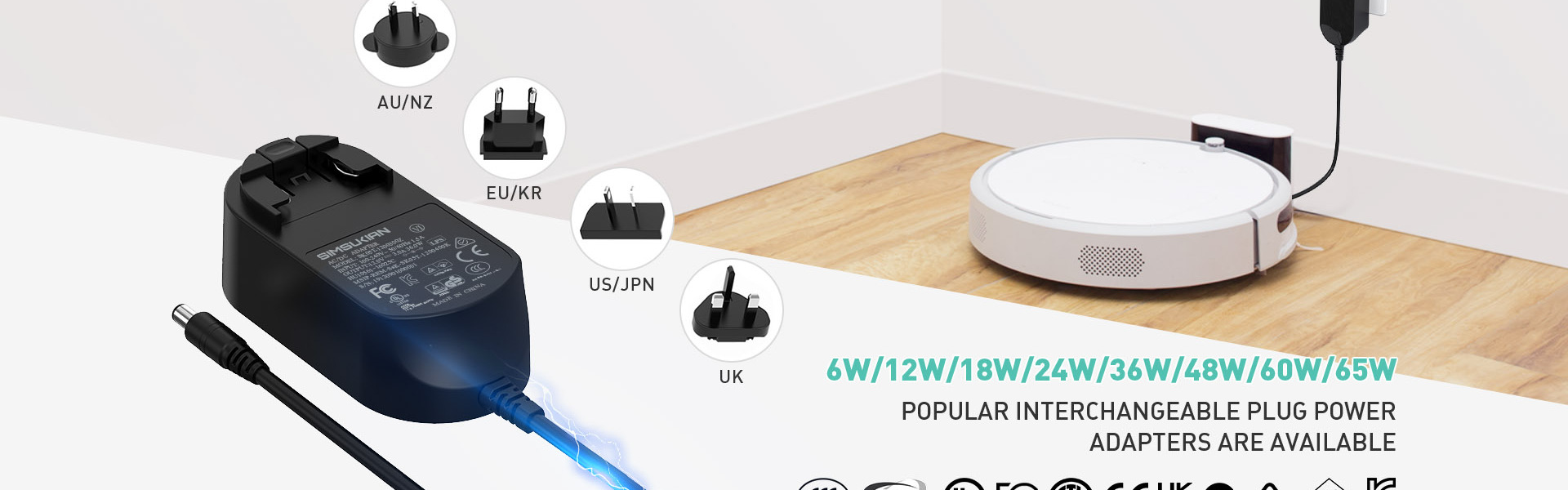
Losses of an interchangeable plug power adapter concentrate on plugs, module contacts and body terminals. When the interchangeable plug power adapter runs at full load, these interfaces may heat more than power components. Wear and oxidation raise resistance over time. Current margin for the interchangeable plug power adapter must account for poor plug cooling, plastic enclosure confinement and contact degradation after repeated insertion. Thermal data shall correlate with contact resistance to distinguish structural or plating issues.
1. Why hotspots form at contact interfaces
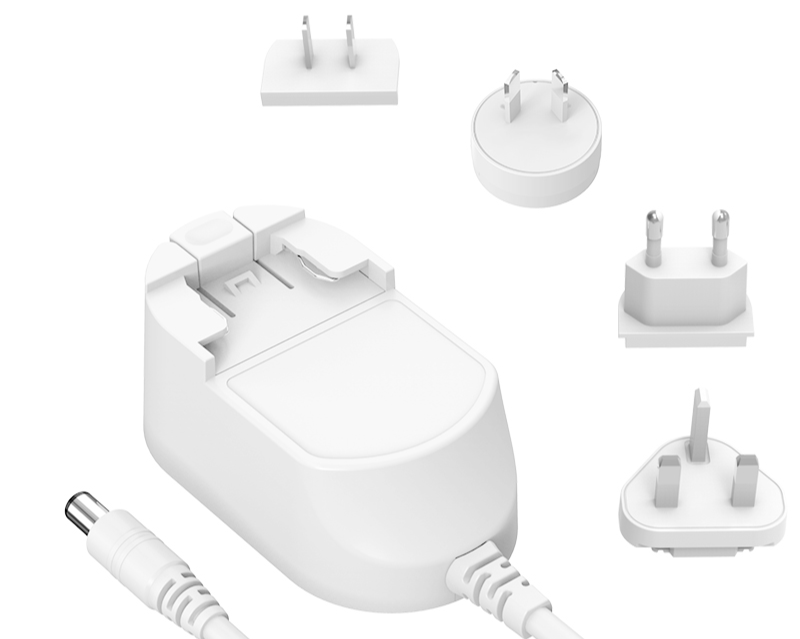
Power devices inside the interchangeable plug power adapter have dedicated thermal designs, while its plugs rely only on convection and shell conduction. Small contact areas cause much higher plug temperature rise than internal conductors. Thermal tests for the interchangeable plug power adapter shall focus on plugs and contacts rather than transformers. Separate readings are required for plug temperature and adjacent plastic parts of the interchangeable plug power adapter to judge reliability and material safety.
2. Contact resistance and current density
Contact resistance of the interchangeable plug power adapter consists of constriction resistance and film resistance, determined by contact area, contact force, plating and oxidation. Even with standard rated-current sizing, local current density may stay high and accelerate plating degradation. Crimp quality between the plug and module contact sets the initial resistance of the interchangeable plug power adapter. Crimp height and deformation must be controlled to avoid gaps that drift resistance with age.
3. Plastic parts and thermal conditions
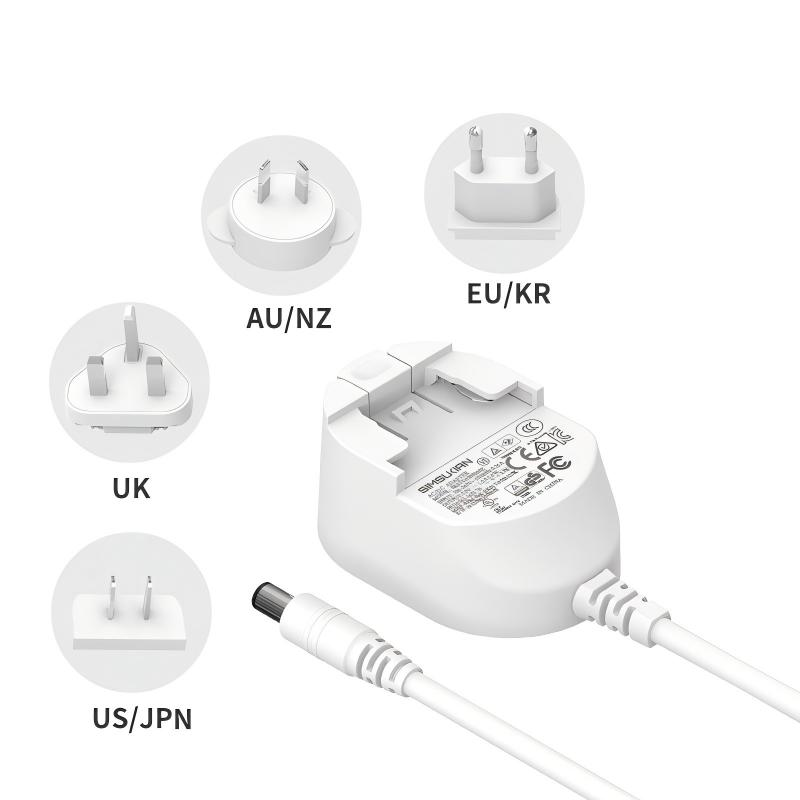
Plastic housings around the plug of the interchangeable plug power adapter have low thermal conductivity and trap heat. Enclosed cavities produce higher temperature rise than open layouts, so convection gaps or extra thermal paths are necessary. Miniaturization often reduces plug cross-section. Better plating and higher contact force compensate for this. Margin calculation for the interchangeable plug power adapter shall include resistance growth after plating wear.
4. Current margin calculation
Current margin of the interchangeable plug power adapter is set with rated current multiplier, maximum ambient temperature and aged contact resistance taken into account. For high-current models, thicker plugs, larger contact areas or upgraded plating work better than merely using higher-temperature plastics. Contact resistance should be measured right after thermal testing; hot-state readings reflect real operating conditions more accurately than cold data.
5. Testing and criteria
Thermal tests for the interchangeable plug power adapter run at maximum ambient temperature with rated current until thermal stability. Thermocouples and thermal cameras measure plugs, contacts and enclosures. Acceptance rules ensure plastics stay below their temperature rating with aging margin reserved. High-current versions have tight thermal budgets, so plugs of the interchangeable plug power adapter are evaluated as independent heat sources at the design stage. Thermal imaging compares different plug options on prototypes quickly.
Conclusion
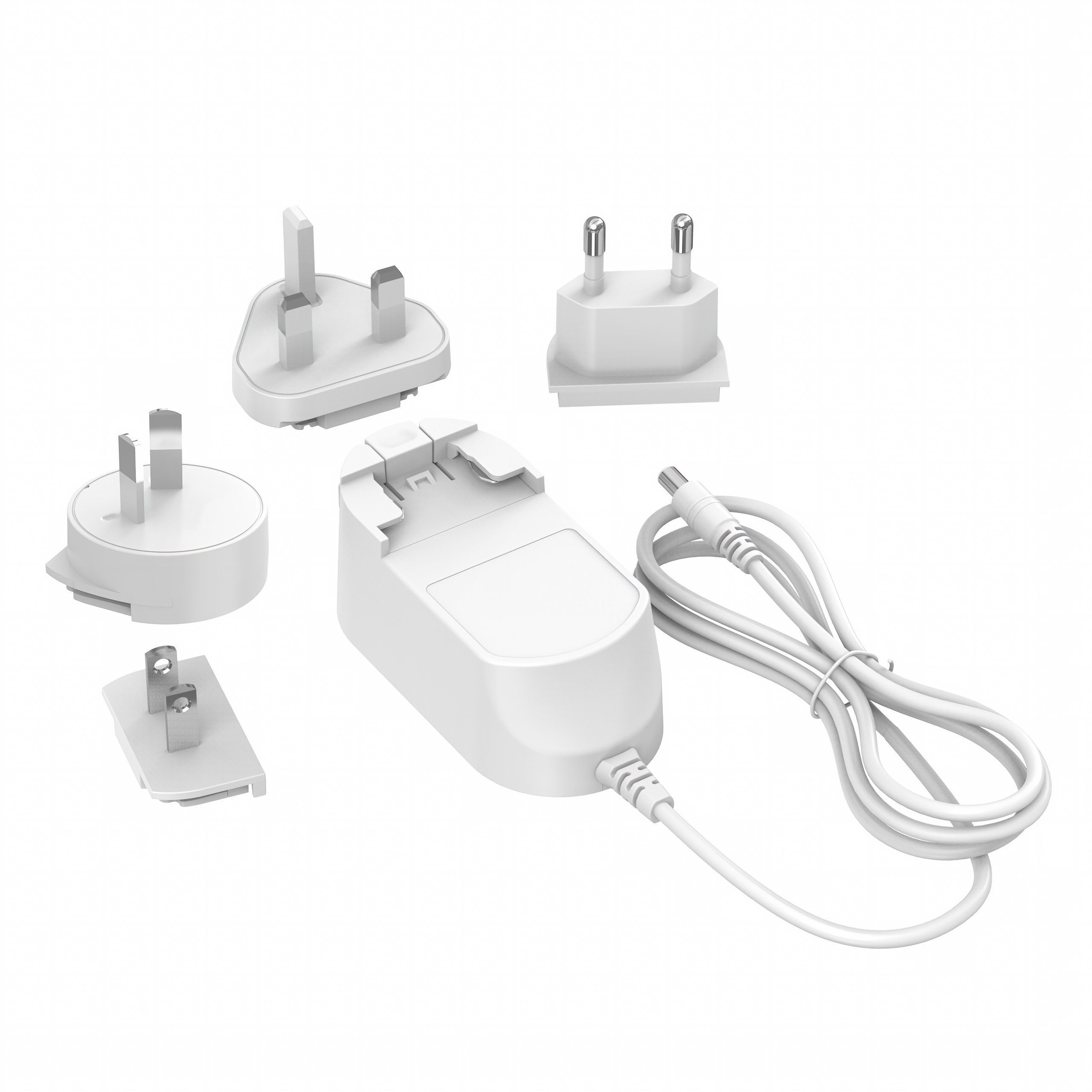
Hotspots occur at contact interfaces instead of chips. Long-run thermal testing under maximum ambient temperature checks plug and contact temperatures. Optimizing cross-section, contact area and plating builds sufficient margin, so the interchangeable plug power adapter avoids plug overheating and plastic deformation under high current. SIMSUKIAN can customize plug thermal design for your product specifications.
FAQ
Q1: What certifications can Simsukian provide?
A1: Simsukian offers CCC, CQC, UL, ETL, CB, CE, UKCA, FCC, KC, KCC, PSE, SAA, RCM, EAC, PSB, BSMI, ST, RoHS, REACH, ERP, DOE VI, CEC, GEMS and KMEPS certificates. We also hold ISO9001 and ISO14001 system certifications.
Q2: What about quality consistency and protection features?
A2: All Simsukian products undergo 100% burn-in testing. Built-in multi-protection includes over-voltage, over-current, short-circuit and over-temperature protection. Features low ripple and low heat generation, with an average lifespan of around 50,000 hours for stable full-load operation.
Q3: Is customization available? What are the lead times for samples and mass production?
A3: OEM/ODM customization is supported, covering voltage, current, connectors, plugs, housings, logos and more. Sample lead time: 5 days. Mass production normally takes 20–25 days. Sample cost can be refunded after placing bulk orders.
Q4: What is the MOQ?
A4: Standard products have fixed MOQs. MOQ for custom designs is negotiable based on the solution. Please contact our sales team for details.
Q5: How do you guarantee lead time, MOQ and after-sales service?
A5: As the original manufacturer, we stock many standard items and maintain reliable lead times. Standard warranty: 1-year free repair, plus lifetime support. After the first year, only material and labor fees apply.
References
1. SIMSUKIAN official website: https://www.simsukianpower.com
2. IEC 62368-1 Audio/video, information and communication technology equipment: https://webstore.iec.ch/publication/27412
3. IEC 60884-1 Plugs and socket-outlets for household and similar purposes: https://webstore.iec.ch/publication/3699