

Abstract
A wall-mount power adapter uses a sealed housing, so heat leaves mainly by natural convection. Temperature rise of power devices and electrolytic capacitors inside the wall-mount power adapter governs life, and touchable surface temperature is also a safety review point for the wall-mount power adapter.
1. Thermal Boundary of Wall-mount Construction
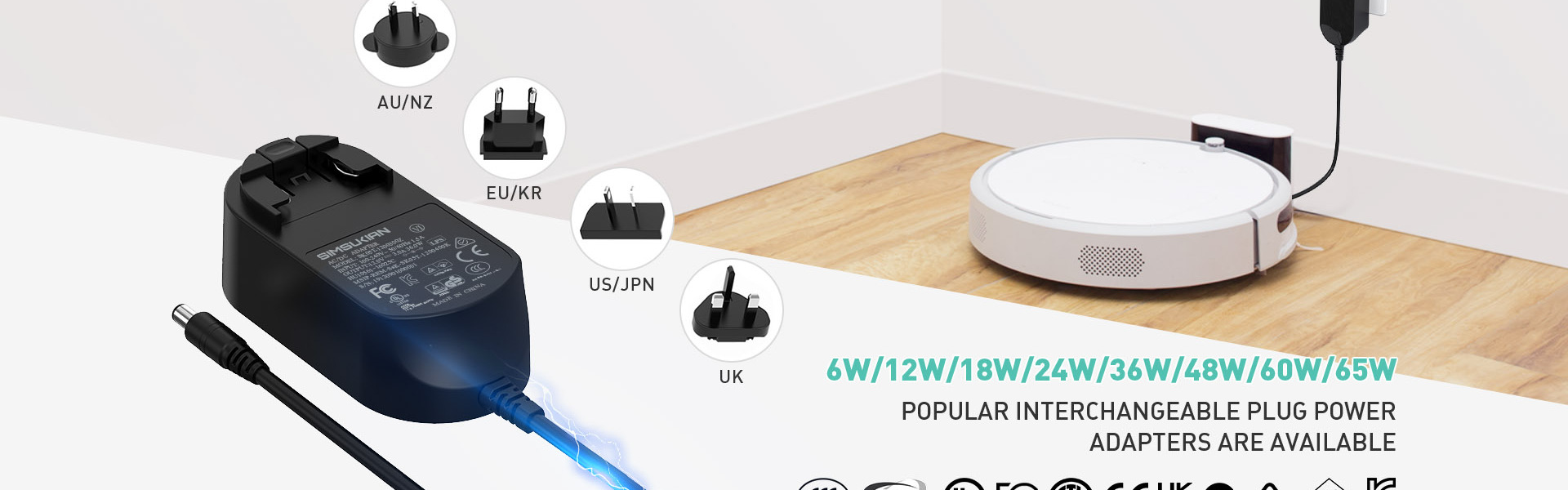
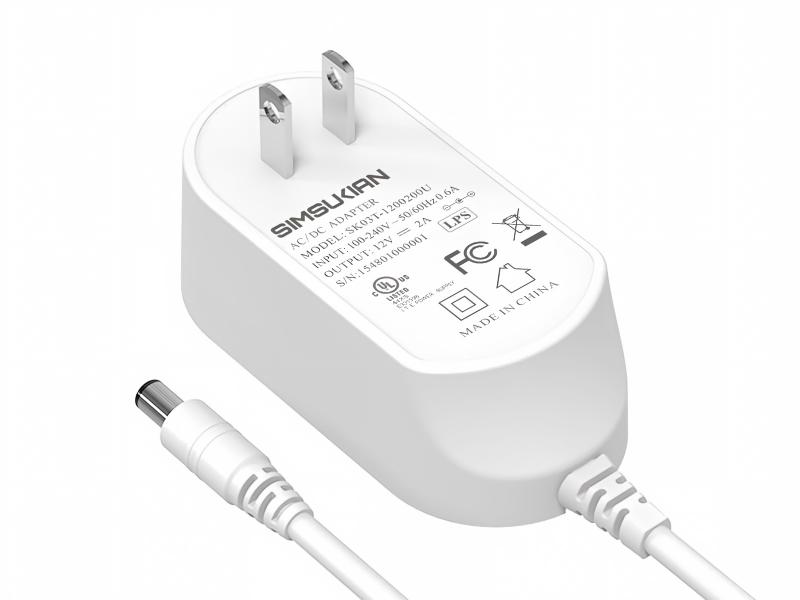
A wall-mount power adapter plugs directly into a wall outlet with limited space around it, and the plastic housing is usually sealed, so heat leaves only through the surface by natural convection and radiation. Compared with vented desktop types, the wall-mount power adapter has higher thermal resistance and greater internal rise at the same power. Design evaluates surface area, potting or thermal pads, and spacing between devices and inner wall; when the wall-mount power adapter sits behind furniture or on a crowded power strip, actual ambient temperature exceeds lab conditions.
2. Device Temperature Rise and Derating
Heat in the wall-mount power adapter concentrates in the switching device, output rectifier, transformer and electrolytic capacitors. Conduction and switching losses of the switch vary with load and line voltage, with conduction dominating at low line and full load; transformer loss combines copper and core loss, and wire gauge plus core material set the temperature distribution. Devices in the wall-mount power adapter are derated by rated current and junction temperature, and derating factors in a sealed structure should be more conservative than in open frames.
3. Surface Temperature and Accessible Parts
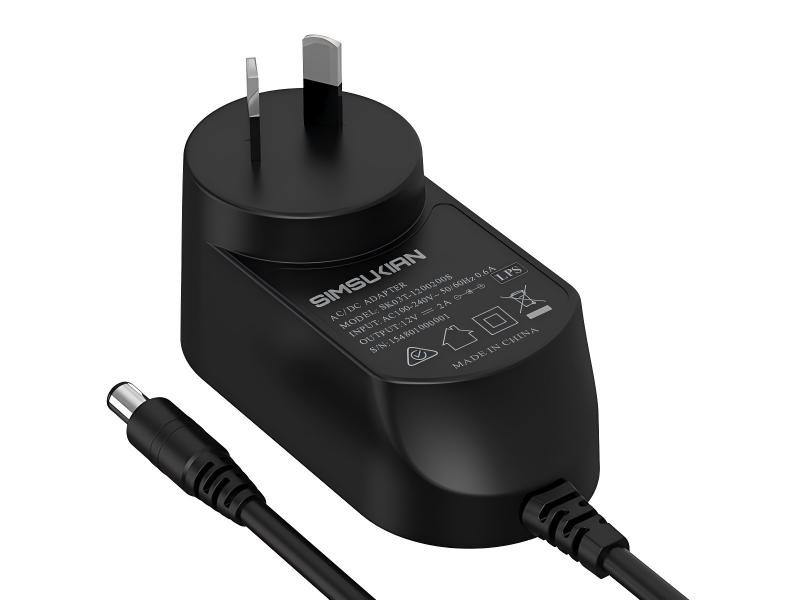
Safety standards set limits for accessible surfaces by material and contact duration, with different allowances for metal and plastic. The housing of the wall-mount power adapter sits close to power devices, and a local hot spot may appear on the wall facing the transformer. Design increases device-to-wall spacing, spreads heat and avoids concentrated hot spots so surface temperature of the wall-mount power adapter stays within limits. Temperature near the nameplate also matters, since prolonged heat lifts labels and fades print.
4. High Ambient Temperature and Derating Curve
Real installations may reach elevated ambient temperature, so output capability of the wall-mount power adapter needs a derating curve defining maximum output above a given ambient. The curve derives from junction temperature and capacitor ratings, and the wall-mount power adapter in a sealed housing typically derates linearly from a defined temperature point. Buyers needing full power in hot environments should raise this at specification stage; the wall-mount power adapter then requires higher-temperature devices or a larger housing rather than software current limiting alone.
5. Thermal Cycling and Long-term Aging Coupling
The wall-mount power adapter experiences repeated thermal cycles from day-night temperature swings and load on/off, stressing solder joints, leads and potting interfaces, which may form micro-cracks over time. Thermal cycling may follow IEC 60068-2-14 methods to verify electrical and visual condition of the wall-mount power adapter after cycles. Industry experience holds that electrolytic capacitor life roughly halves for every ten degrees Celsius rise, so capacitors in the wall-mount power adapter should sit away from heat sources and use high-temperature series when needed.
Conclusion
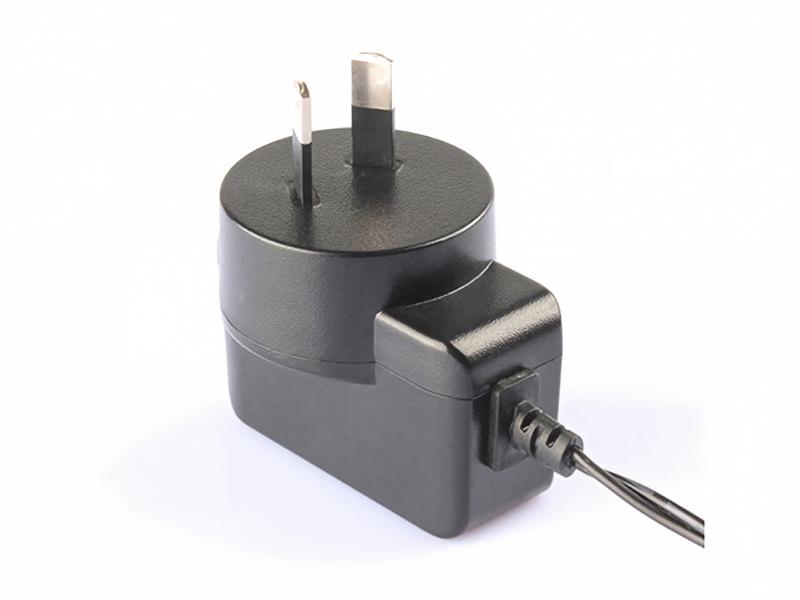
Thermal design of a wall-mount power adapter is constrained by the sealed housing and wall installation, so temperature margin must be wider than in open frames. Simsukian provides temperature pre-testing and derating evaluation. Overseas buyers are welcome to contact Simsukian to confirm output capability under high ambient conditions.
FAQ
Q1: Are the certifications complete and verifiable?
A1: Simsukian’s full product range covers major certifications including UL, CE, FCC, PSE, KC, SAA, UKCA, and CB. All certificates can be verified through official channels, effectively avoiding risks of fake, borrowed, or expired certificates that may cause customs clearance failure or platform delisting.
Q2: How is the quality stability and protection performance?
A2: All Simsukian products undergo 100% aging tests and are equipped with multiple protections including over-voltage, over-current, short-circuit, and over-temperature protection. They feature low ripple, low heat generation, and an average lifespan of approximately 50,000 hours, supporting long-term full-load stable operation.
Q3: Can products be customized? What are the sample and mass production lead times?
A3: OEM/ODM customization is fully supported, including voltage, current, connector, plug type, housing, and logo. Sample lead time is 5 days. Standard bulk order lead time is 18–20 days. Sample fees are refundable after placing a bulk order.
Q4: Do the products meet energy efficiency and standby power requirements?
A4: The full range meets DOE Level VI and higher energy efficiency standards. Some models achieve no-load power consumption ≤0.1W, complying with ErP and other international energy-saving regulations.
Q5: How are lead time, MOQ, and after-sales service guaranteed?
A5: As a source manufacturer with abundant stock of standard models, delivery is stable. Standard warranty is 1 year (free repair within the first year). Lifetime repair support is provided; after the first year, appropriate material and labor fees will be charged.
References
1. Simsukian Official Website
2. IEC 62368-1 Audio/video, information and communication technology equipment – Safety requirements
3. IEC 60068-2-14 Environmental testing – Test N: Change of temperature
Power adapter
Power adapter
Related Articles More>>
- Under-Voltage Input Protection for Charger: Equipment Safety for Low-Grid-Voltage Conditions
- Leakage Current and Locking Structure Parameters of interchangeable plug power adapter for Portable Medical Devices
- EMC Design of GaN Fast Charger: High dv/dt Noise Suppression and Filter Layout
- High-frequency Magnetics Design for GaN Fast Charger: Core Loss and Winding Structure Control