

Abstract
A desktop power adapter cools through its enclosure by natural convection. Constraints concentrate on switches, electrolytic capacitors and the transformer, where excess rise accelerates electrolyte loss and insulation aging.
1. Loss Breakdown
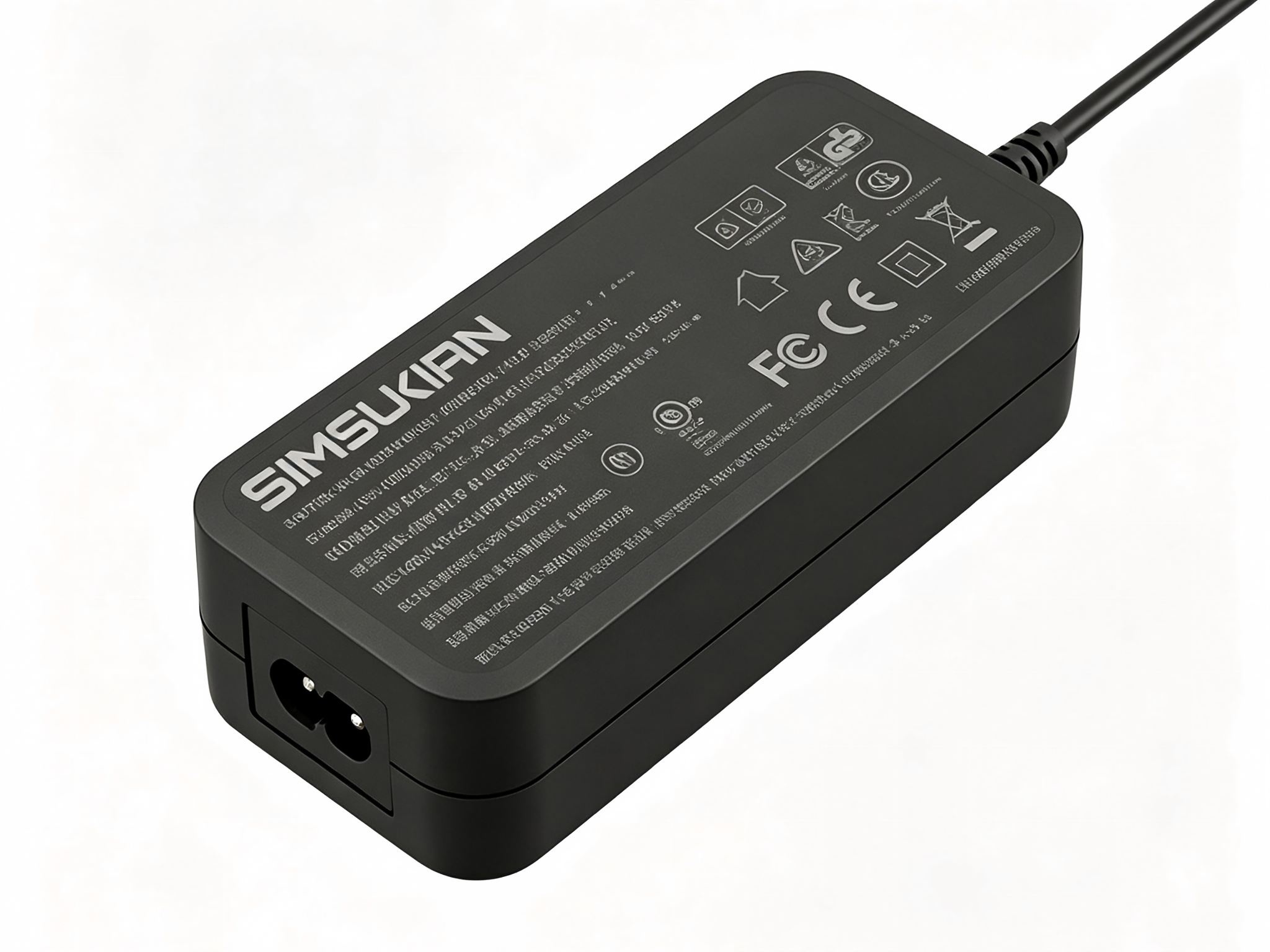
Losses in a desktop power adapter divide into switching, conduction, magnetic and passive parts, and a desktop power adapter with an active PFC front end adds switch and diode dissipation.
2. Housing Thermal Resistance
The housing of a desktop power adapter conducts poorly, so heat moves by internal convection, radiation and surface exchange; a desktop power adapter placed flat loses bottom convection, which is why testing uses an insulating bench.
3. Derating and Burn-In
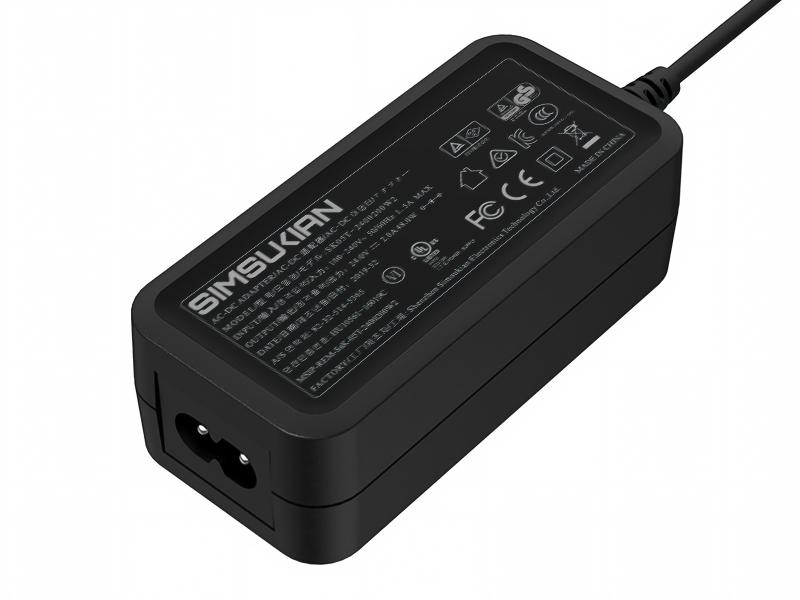
Component derating in a desktop power adapter follows its continuous load profile, and full-load burn-in of a desktop power adapter at forty and fifty degrees precedes release.
4. Layout Effects
Layout decides hot-spot clustering in a desktop power adapter, and a desktop power adapter with clustered magnetics and switches forms heat islands that ribs cannot cure.
5. Field Derating
Cabinet ambient pushes a desktop power adapter beyond rated conditions, so a desktop power adapter ships with a temperature-indexed derating table for system designers.
Conclusion
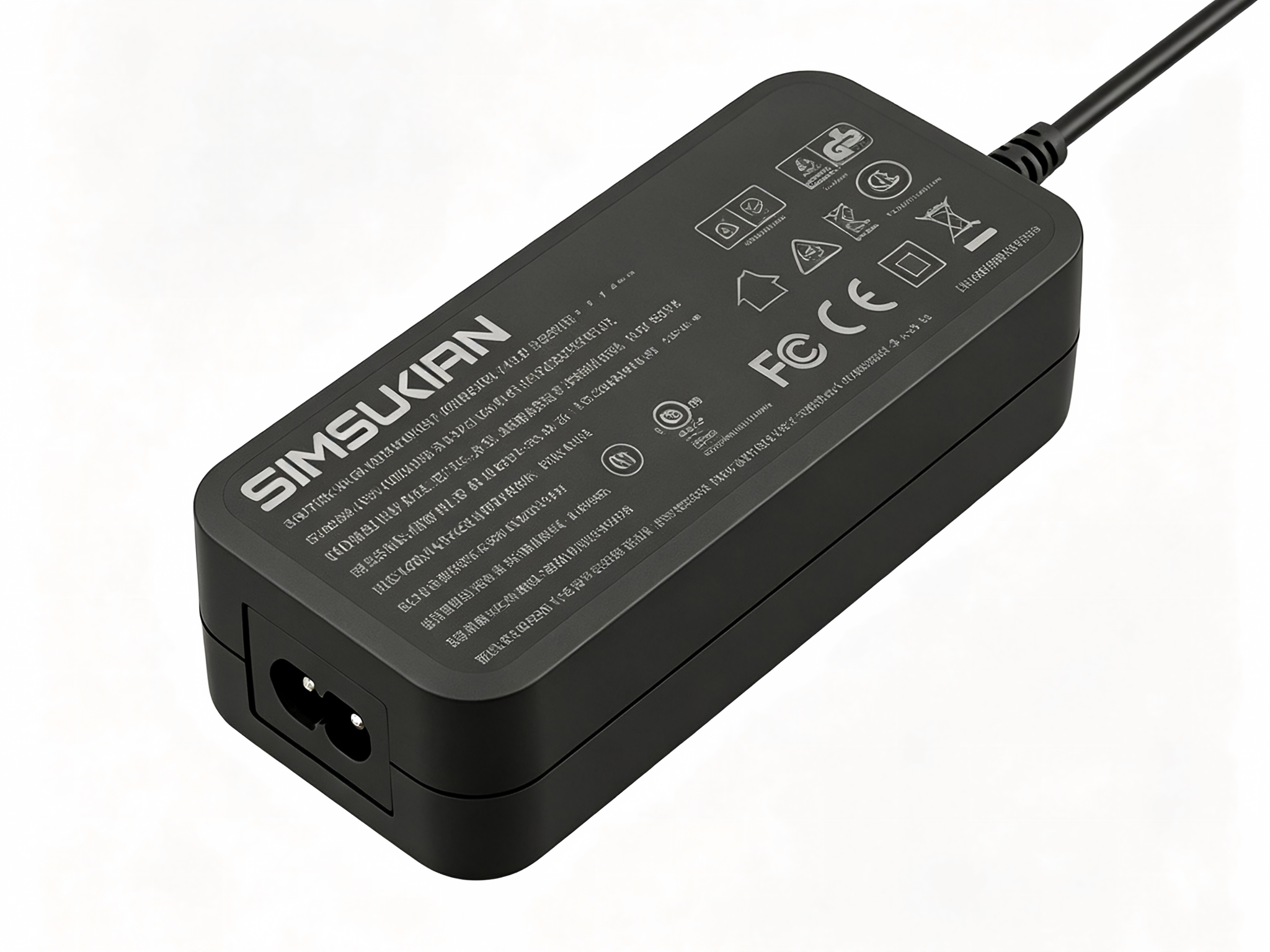
Closing the loop from loss decomposition through modeling to burn-in keeps a desktop power adapter stable in cabinets and seasonal swings, and a desktop power adapter validated this way supports long-term integration.
FAQ
Q1: Are the certifications complete and verifiable?
A1: Simsukian’s full product range covers major certifications including UL, CE, FCC, PSE, KC, SAA, UKCA, and CB. All certificates can be verified through official channels, effectively avoiding risks of fake, borrowed, or expired certificates that may cause customs clearance failure or platform delisting.
Q2: How is the quality stability and protection performance?
A2: All Simsukian products undergo 100% aging tests and are equipped with multiple protections including over-voltage, over-current, short-circuit, and over-temperature protection. They feature low ripple, low heat generation, and an average lifespan of approximately 50,000 hours, supporting long-term full-load stable operation.
Q3: Can products be customized? What are the sample and mass production lead times?
A3: OEM/ODM customization is fully supported, including voltage, current, connector, plug type, housing, and logo. Sample lead time is 5 days. Standard bulk order lead time is 18–20 days. Sample fees are refundable after placing a bulk order.
Q4: Do the products meet energy efficiency and standby power requirements?
A4: The full range meets DOE Level VI and higher energy efficiency standards. Some models achieve no-load power consumption ≤0.1W, complying with ErP and other international energy-saving regulations.
Q5: How are lead time, MOQ, and after-sales service guaranteed?
A5: As a source manufacturer with abundant stock of standard models, delivery is stable. Standard warranty is 1 year (free repair within the first year). Lifetime repair support is provided; after the first year, appropriate material and labor fees will be charged.
References
1. SIMSUKIAN official website
2. IEC 62368-1 Audio/video, information and communication technology equipment
3. IEC 60068-2-78 Damp heat, steady state