

Abstract
Pins of a wall-mount power adapter take insertion friction and socket clamping force for years, and excessive contact resistance overheats the pin and softens the plastic base. A wall-mount power adapter usually uses brass or phosphor bronze: brass machines well while bronze holds elasticity better, and the choice depends on pin shape and deformation after repeated mating. Plating on a wall-mount power adapter is normally nickel barrier plus tin, and when the layer is too thin it wears through in a few insertions and the exposed copper oxidizes quickly. Contact resistance must be compared at the same clamping force and measuring point, since values without those conditions are not comparable.
1. Choice of Pin Material
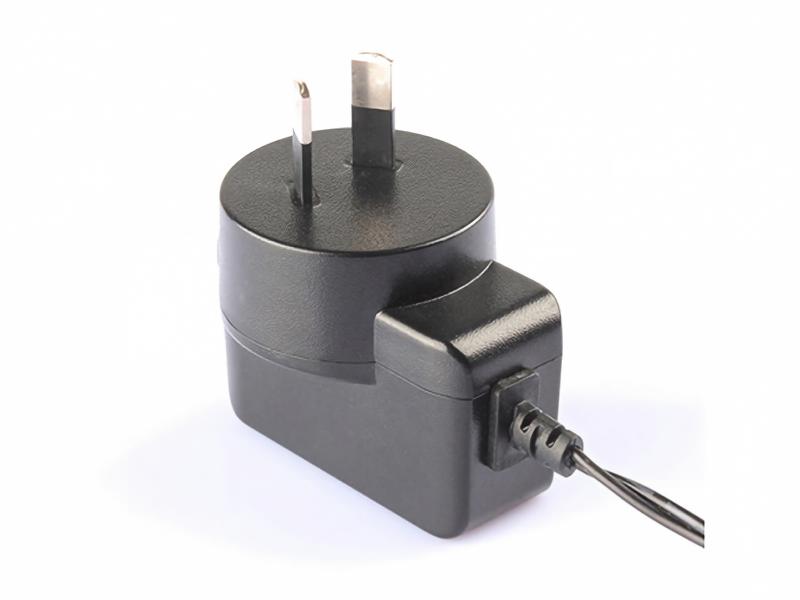
Pins of a wall-mount power adapter are mostly brass, where copper content and impurity control set conductivity and spring-back after bending. For high-current models a wall-mount power adapter prefers phosphor bronze, which holds elasticity and does not loosen after mating, but work-hardens noticeably and needs annealing in the bending process. When the ratio of pin thickness to bend radius is too small, internal stress concentrates and hairline cracks may appear after long use.
2. Plating Structure and Diffusion
The nickel layer of a wall-mount power adapter acts as a barrier against copper diffusing into tin, while the tin layer provides low contact resistance and solderability. Plating thickness of a wall-mount power adapter is controlled at the micrometre level, and a thin barrier accelerates diffusion at high temperature, leaving the surface porous and discoloured.
3. Surface State and Contact Area
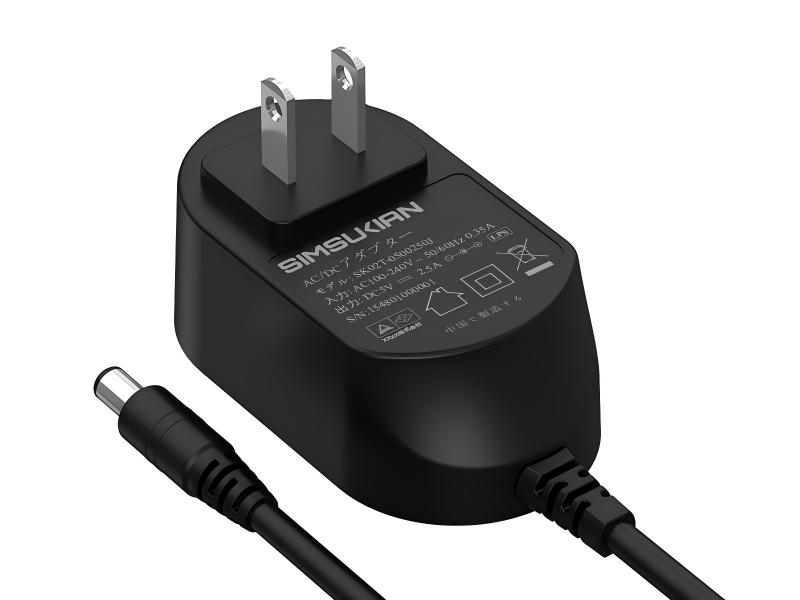
Surface roughness of pins in a wall-mount power adapter changes the real contact area, and coarse surfaces concentrate current on a few asperities with higher local density. After mating-life tests a wall-mount power adapter should remeasure contact resistance and pin temperature rise, since both rising together means the plating is worn through locally. Probe pressure is kept constant during measurement, since different pressure changes the contact area and shifts the reading.
4. Root Overmoulding and Stress Concentration
The joint between pin and housing is a stress point in a wall-mount power adapter, and overmoulding weld strength decides whether it loosens after long use. A wall-mount power adapter should run mating-life and torque tests to see pin displacement or cracked moulding, and inspect blistering and base corrosion after salt spray.
5. Incoming and Process Verification
Incoming inspection of a wall-mount power adapter covers plating thickness, contact resistance and salt spray, because appearance alone cannot prove the barrier layer. After changing supplier or plating shop, a wall-mount power adapter must redo temperature-rise and salt-spray validation, since process differences often appear only after months of use.
Conclusion
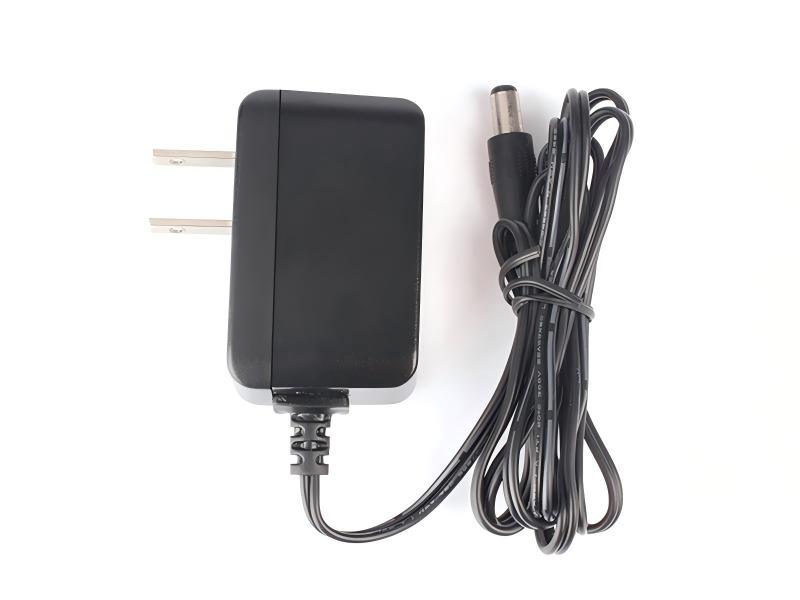
Small as they are, pins are where electrical and mechanical performance of a wall-mount power adapter meet. Matching base elasticity, plating thickness and overmoulding strength, then gating with incoming inspection and life tests, keeps contact resistance low through repeated mating of a wall-mount power adapter. Overseas buyers may contact SIMSUKIAN to confirm pin-material and plating processes for wall-mount power adapter, including plating thickness and salt-spray acceptance levels. Acceptance levels are reviewed on wall-mount power adapter samples from each production batch.
FAQ
Q1: Are the certifications complete and verifiable?
A1: Simsukian’s full product range covers major certifications including UL, CE, FCC, PSE, KC, SAA, UKCA, and CB. All certificates can be verified through official channels, effectively avoiding risks of fake, borrowed, or expired certificates that may cause customs clearance failure or platform delisting.
Q2: How is the quality stability and protection performance?
A2: All Simsukian products undergo 100% aging tests and are equipped with multiple protections including over-voltage, over-current, short-circuit, and over-temperature protection. They feature low ripple, low heat generation, and an average lifespan of approximately 50,000 hours, supporting long-term full-load stable operation.
Q3: Can products be customized? What are the sample and mass production lead times?
A3: OEM/ODM customization is fully supported, including voltage, current, connector, plug type, housing, and logo. Sample lead time is 5 days. Standard bulk order lead time is 20-25 days. Sample fees are refundable after placing a bulk order.
Q4: Do the products meet energy efficiency and standby power requirements?
A4: The full range meets DOE Level VI and higher energy efficiency standards. Some models achieve no-load power consumption ≤0.1W, complying with ErP and other international energy-saving regulations.
Q5: How are lead time, MOQ, and after-sales service guaranteed?
A5: As a source manufacturer with abundant stock of standard models, delivery is stable. Standard warranty is 1 year (free repair within the first year). Lifetime repair support is provided; after the first year, appropriate material and labor fees will be charged.
References
1. SIMSUKIAN official website https://www.simsukianpower.com
2. IEC 60884-1 Plugs and socket-outlets https://webstore.iec.ch
3. IEC 62368-1 Safety requirements https://webstore.iec.ch