

Abstract
Metal springs are core conductive parts inside Conversion Pin Adapter, directly deciding conductivity and service life of Conversion Pin Adapter. This article compares copper alloy materials for springs of Conversion Pin Adapter, introduces contact resistance and aging test data, analyzes corrosion failure under high temperature and humidity, helping overseas engineers select suitable Conversion Pin Adapter.
1. Role of Metal Springs in Conversion Pin Adapter
Conversion Pin Adapter rely on metal springs to realize electrical connection between pin modules and power main bodies. Many buyers evaluate Conversion Pin Adapter only by housing appearance and ignore spring materials, leading to intermittent power cut and local overheating overseas. Conductivity of Conversion Pin Adapter is mostly determined by spring material and plating process.
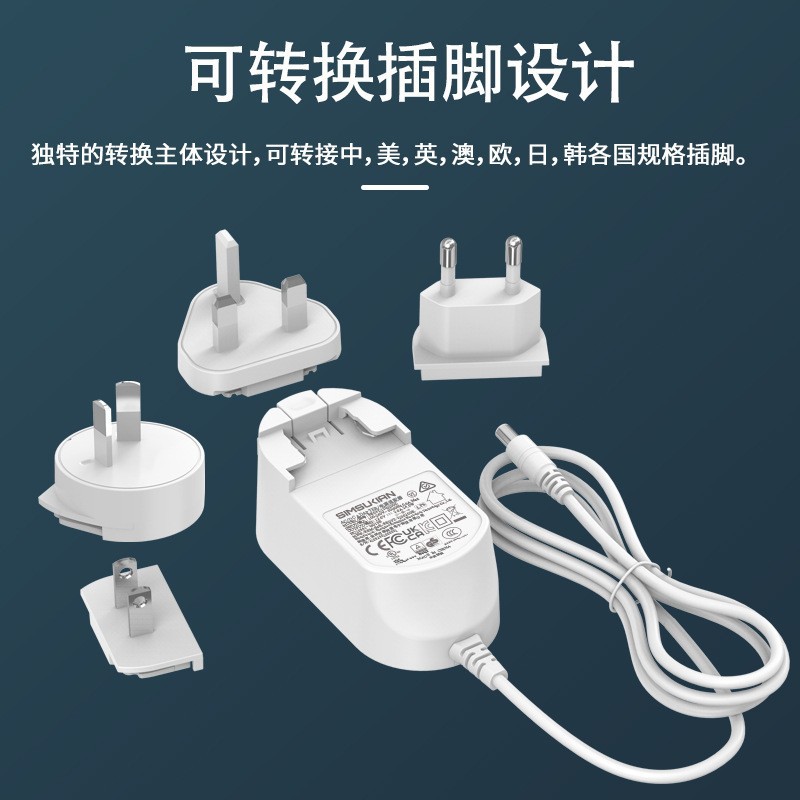
Springs of Conversion Pin Adapter need high conductivity, stable elasticity and corrosion resistance. When spring elasticity fades, contact resistance of Conversion Pin Adapter rises and generates heat under continuous operation, bringing thermal runaway risk. For equipment running nonstop, spring material selection of Conversion Pin Adapter is critical.
2. Spring Materials and Key Test Parameters of Conversion Pin Adapter
Commercial Conversion Pin Adapter mostly adopt phosphor bronze springs, and high-end versions use beryllium copper. Qualified Conversion Pin Adapter have initial contact resistance ≤20mΩ at room temperature. After 10,000 plug cycles, contact resistance increase shall not exceed 50%.
Humidity test: place Conversion Pin Adapter under 40℃, 85%RH for 168 hours, simple salt spray test. No obvious rust on springs, contact resistance still qualified after retest. Aging test: Conversion Pin Adapter run 72h full-load aging plus 500 thermal cycles between -20℃ and +60℃; springs shall have no permanent deformation.
Gold or nickel plating is common. Plating thickness affects corrosion resistance of Conversion Pin Adapter. Conversion Pin Adapter with thin plating turn black and lose contact quickly in humid coastal overseas regions.
3. Performance Comparison of Different Spring Materials
Phosphor bronze springs are cost-effective for mass Conversion Pin Adapter, suitable for common indoor devices. Beryllium copper springs maintain elasticity better, fit portable test equipment which frequently replace pins of Conversion Pin Adapter.
Low-quality Conversion Pin Adapter use ordinary brass springs. Brass loses elasticity after thousands of plugs, contact resistance of Conversion Pin Adapter rises rapidly. Brass spring Conversion Pin Adapter are not recommended for humid coastal overseas markets.
4. Risks Caused by Spring Failure of Conversion Pin Adapter
Typical failure symptom of bad springs in Conversion Pin Adapter: intermittent power supply and overheating. When device current reaches 6A or 10A, heat from poor contact of Conversion Pin Adapter accelerates housing aging and may cause fire hazards.
At sampling stage, buyers can request salt spray and plug aging reports of Conversion Pin Adapter, verify contact resistance change before and after testing to predict long-term stability.
Conclusion
Metal springs determine conductivity and durability of Conversion Pin Adapter. This article compares alloy spring materials inside Conversion Pin Adapter, presents measured parameters of contact resistance, salt spray and thermal cycles, and analyzes corrosion risks under hot-humid environment. For humid coastal overseas markets, choose Conversion Pin Adapter with phosphor bronze or beryllium copper springs. Contact SenShuQiang for procurement and customization inquiries.
Sources:
1.IEC 60068-2-11 Environmental testing-salt mist test
2.IEC 60512-3-1 Connectors-contact resistance measurement
3.IEC 60884-1 Material requirements for conductive parts of plugs
Power adapter
Power adapter
NewUpdates
Related Articles More>>
- Under-Voltage Input Protection for Charger: Equipment Safety for Low-Grid-Voltage Conditions
- Global Mains Adaptation and Foreign Trade Compliance Technical Analysis of Wide-Voltage Level VI Energy-Efficient Charger
- Short-Circuit Protection Design for Power Adapter: Evaluation of Auto-Recovery and Safety Shutdown
- Input Surge Protection for Power Adapter: Lightning and Power-On Spike Suppression