

Abstract
Energy efficiency of a desktop power adapter ranks high priority for overseas buyers. Buyers need to understand power loss under multiple load levels of the desktop power adapter. Desktop power adapter test rules for DoE Level VI and EU ErP cover no-load loss, half-load and full-load efficiency. Focus on loss sources to support energy-saving equipment selection.
1. Core Efficiency Definition of Desktop Power Adapter
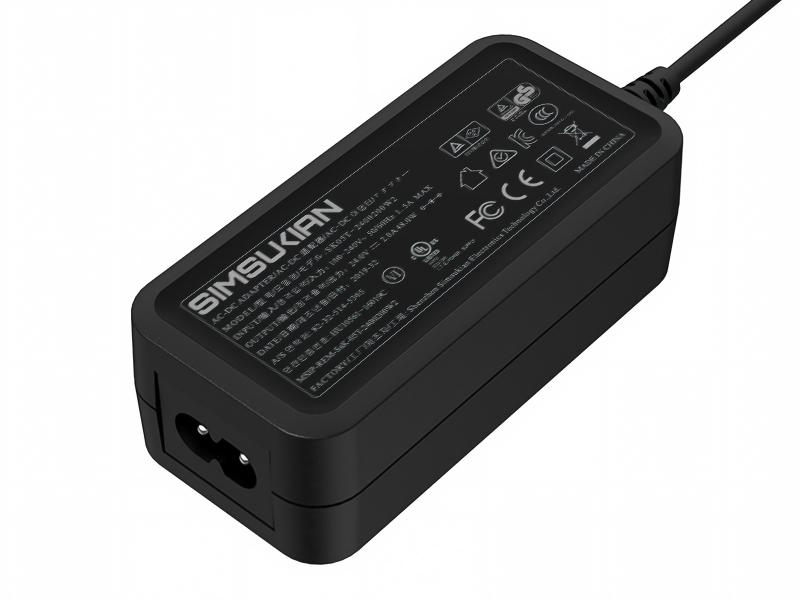
Efficiency of the desktop power adapter describes energy conversion ratio from AC input to DC output. Efficiency tests are performed at 25%, 50%, 75% and 100% rated load. Average efficiency of the desktop power adapter is calculated from these four points and enforced by international energy regulations. For products rated 30W to 150W, minimum average efficiency thresholds vary by power rating. No-load power consumption of the desktop power adapter shall stay under 0.1W to meet standby energy control.
Switching loss, conduction loss and static auxiliary circuit power draw create total energy waste for the desktop power adapter. Switching loss generated by high-speed MOSFET switching dominates at light load. Conduction loss from rectifier diode voltage drop becomes more significant under full load. Synchronous rectification inside the desktop power adapter greatly cuts conduction loss and improves efficiency across all load ranges.
2. Environmental Test Parameters for Desktop Power Adapter Efficiency
Efficiency measurement for the desktop power adapter is carried out at 25℃±5℃ under standard atmospheric pressure. Tests run with 115VAC and 230VAC input to replicate North American and European grid conditions. The desktop power adapter requires a 30-minute preheating period to reach thermal stability and eliminate reading drift caused by temperature changes.
High precision power analyzers capture input active power and DC output power simultaneously for real-time efficiency calculation. The desktop power adapter often suffers efficiency drop at 25% light load, which acts as a critical parameter for equipment running under low-load conditions.
3. Energy Regulation Requirements for Desktop Power Adapter
Desktop power adapter shipped to North America must comply with DoE Level VI. Units sold within EU follow ErP ecodesign rules. Customs clearance of the desktop power adapter requires official test reports issued by CNAS or NVLAP accredited labs. Any desktop power adapter failing efficiency limits cannot be sold locally.
4. Energy Saving Selection Tips for Desktop Power Adapter
Desktop power adapter with ultra-low no-load power fits devices with permanent standby mode. For intermittent operating equipment, buyers should check efficiency of the desktop power adapter at 25%~50% load. Full-load efficiency alone is insufficient; efficiency curve across all loads forms the core metric to evaluate long-term energy use of the desktop power adapter.
Conclusion
Efficiency test standards and segmented loss features of the desktop power adapter decide compliance with international energy regulations. Validation of full-load-range efficiency during procurement helps reduce long-term operating energy cost. If you require custom efficiency solutions for desktop power adapter, contact Simsukian for test reports and sample evaluation.
References
1. Google Search Central E-E-A-T guidance
Power adapter
Power adapter
Related Articles More>>
- Thermal Management Design for Charger: Reduce Temperature Rise & Extend Service Life
- High Power Density Design and Foreign Trade Consumer Electronics Application Analysis of GaN Miniaturized Charger
- Why SiC Changes the Adapter, Not Just the Datasheet
- PD GaN Fast Charger - Thermal Management and Temperature Rise Control Technical Parameters