

Abstract
Protocol compatibility of a USB charger shapes end-user charging experience. A USB charger communicates and negotiates power levels with connected devices. Buyers should confirm the full protocol list of the USB charger to avoid disappointing charging speed.
Main Content
1. Handshake and Identification Mechanism
After power-on, the USB charger communicates with connected devices over USB data pins to read charging requests. Embedded firmware inside the USB charger distinguishes BC1.2 and proprietary fast-charging protocols and switches voltage and current levels accordingly. Timing control is critical for the USB charger. Too fast identification causes misjudgment while slow handshake creates noticeable lag. Massive compatibility tests across device models are completed during development.
2. Graded Power Output Architecture
Multi-protocol USB charger supports multiple power levels. The USB charger respects the maximum safe power reported by the connected device and avoids forcing high voltage. Smooth transition between power levels keeps voltage fluctuation low to prevent charging interruption. Single-port USB charger serves one device only, while multi-port USB charger needs dynamic power allocation to prevent port conflicts.
3. Compatibility Validation Matrix
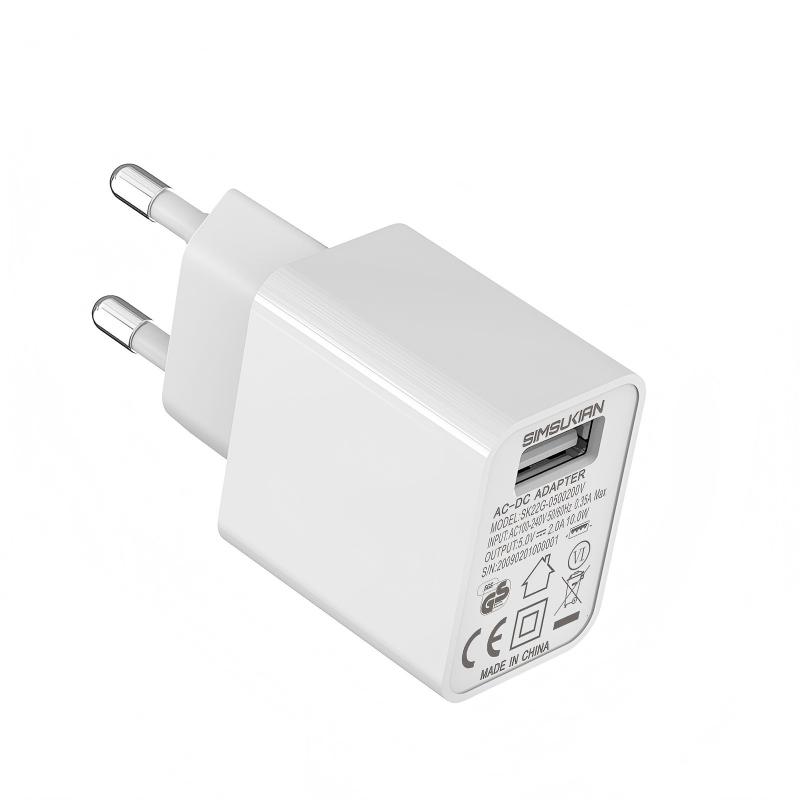
Before mass release, every USB charger goes through a wide compatibility test matrix with various device models. Test scenarios include full-load continuous charging, hot plugging and handshake under high and low temperatures. Engineers log handshake failure, level cycling and shutdown issues of the USB charger. The compatibility database keeps expanding as new consumer devices launch.
4. Firmware Revision and Version Control
Protocol behaviour of the USB charger is controlled by firmware. New device compatibility can be added via firmware upgrade. Simsukian maintains strict version control for firmware of the USB charger. Every revision is logged and verified to preserve compatibility with existing hardware. All mass-produced USB charger units share identical firmware to guarantee consistent performance within one batch.
5. Labelling and Compliance Boundaries
Protocol statements printed on datasheets and nameplates must match the real capability of the USB charger. Overstating supported protocols creates compliance risks. Some proprietary fast-charging protocols require formal licensing. During project discussion, Simsukian clearly shares supported protocols and licensing status for the USB charger to help buyers assess overseas market compliance.
Conclusion
Protocol negotiation is a core factor for consumer-grade USB charger. Handshake reliability, level transition and firmware maintainability directly shape end-user feedback. Simsukian runs a dedicated protocol tuning lab and can adjust firmware of the USB charger for custom device compatibility. Overseas buyers may contact Simsukian for custom protocol development.
FAQ
Q1: Does Simsukian support OEM and ODM orders?
A1: Yes, Simsukian supports OEM & ODM customization, including logo, casing, parameter and packaging adjustment.
Q2: What certifications can Simsukian provide?
A2: Simsukian can provide CE, RCM, FCC, UL, CCC, KC/KCC, PSE, SAA certification certificates. The company holds ISO9001 and ISO14001 system certifications.
Q3: What is the sample lead time?
A3: Sample preparation takes 5 working days.
Q4: What trade terms can be accepted for cooperation?
A4: Simsukian supports FOB, and EXW can be discussed upon customer request.
Q5: What is the warranty period for the products?
A5: The product warranty period is 1 year.
References
1. Simsukian Official Website
2. USB BC 1.2 Battery Charging Specification
3. IEC 62368-1 Audio/video, information and communication technology equipment – Safety requirements
Power adapter
Power adapter
Related Articles More>>
- ESD and Light-Load Stability of interchangeable plug power adapter for Portable Live Streaming Gear
- Thermal Management Design for Charger: Reduce Temperature Rise & Extend Service Life
- Body Diode Behaviour and Reverse Recovery Control in SiC Power Adapter
- Power Adapter - Thermal Design and Heat Management Technical Parameters