

Abstract
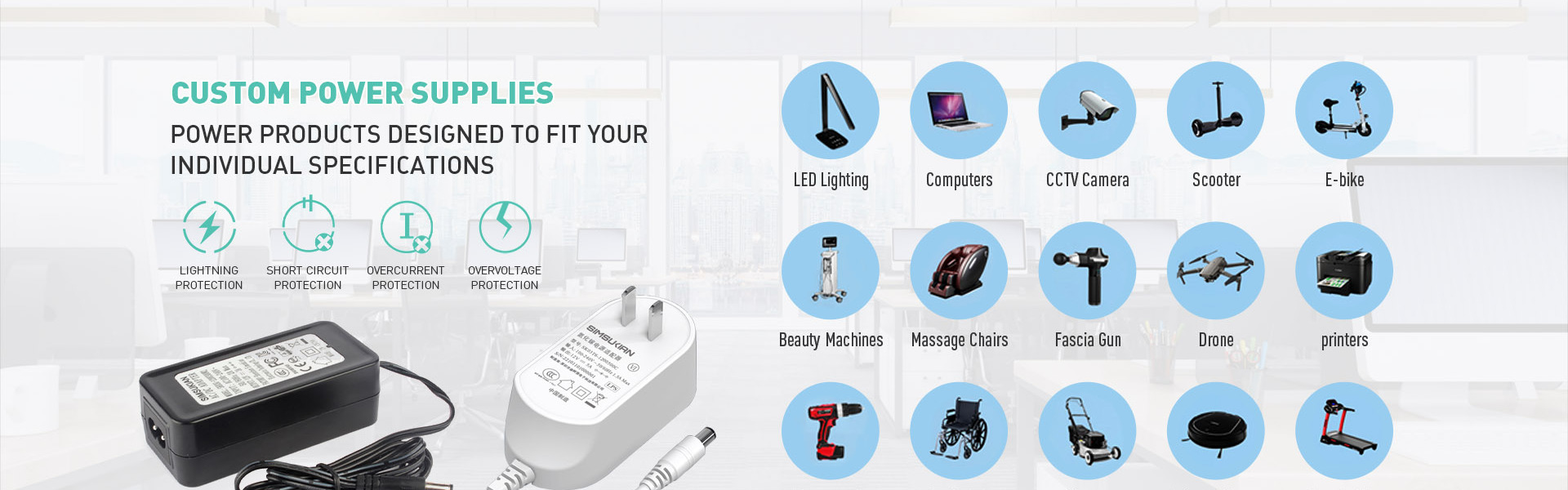
The core principle of desktop power adapter selection is proper matching. Mismatches in power rating, output voltage and connector type of desktop power adapters will lead to rework costs and concentrated customer complaints during mass production. This guide provides directly applicable calculation formulas and limit values based on five evaluation criteria, including power rating and peak margin, voltage tolerance and line loss, connector type and cabling, energy efficiency and pre-certification verification, as well as mass production consistency. All data are derived from current mandatory standards and verifiable metrics, for B-side purchasers and engineering teams to conduct self-inspection before inquiry. Shenzhen Simsukian Electronics Technology Co., Ltd. has nearly 30 years of experience in power adapter manufacturing, covering power ranges from 3W to 240W. The company holds multi-country safety certifications and sample testing capabilities, and can convert the above five criteria into calculation sheets for specific models.
| Output Rating | Typical Specification | Reference Average Efficiency | No-load Power Consumption Limit | Common Application Scenarios |
|---|---|---|---|---|
| 24W | 12V/2A | 86.2% | ≤0.10W | Routers, small household appliances |
| 36W | 12V/3A | 87.4% | ≤0.10W | Security cameras, monitors |
| 60W | 12V/5A | ≥88.0% | ≤0.21W | Industrial control terminals, audio and video equipment |
| 90W | 19V/4.74A | ≥88.0% | ≤0.21W | All-in-one devices, beauty equipment |
| 120W | 24V/5A | ≥88.0% | ≤0.21W | Smart home control hosts, advertising displays |
Table 1 Comparison of Key Parameters and Limits (Compiled per Current Standards and Typical Specifications)
1. Power Criterion: Continuous Power × 1.2 as the Baseline, Peak Power Defines the Upper Limit
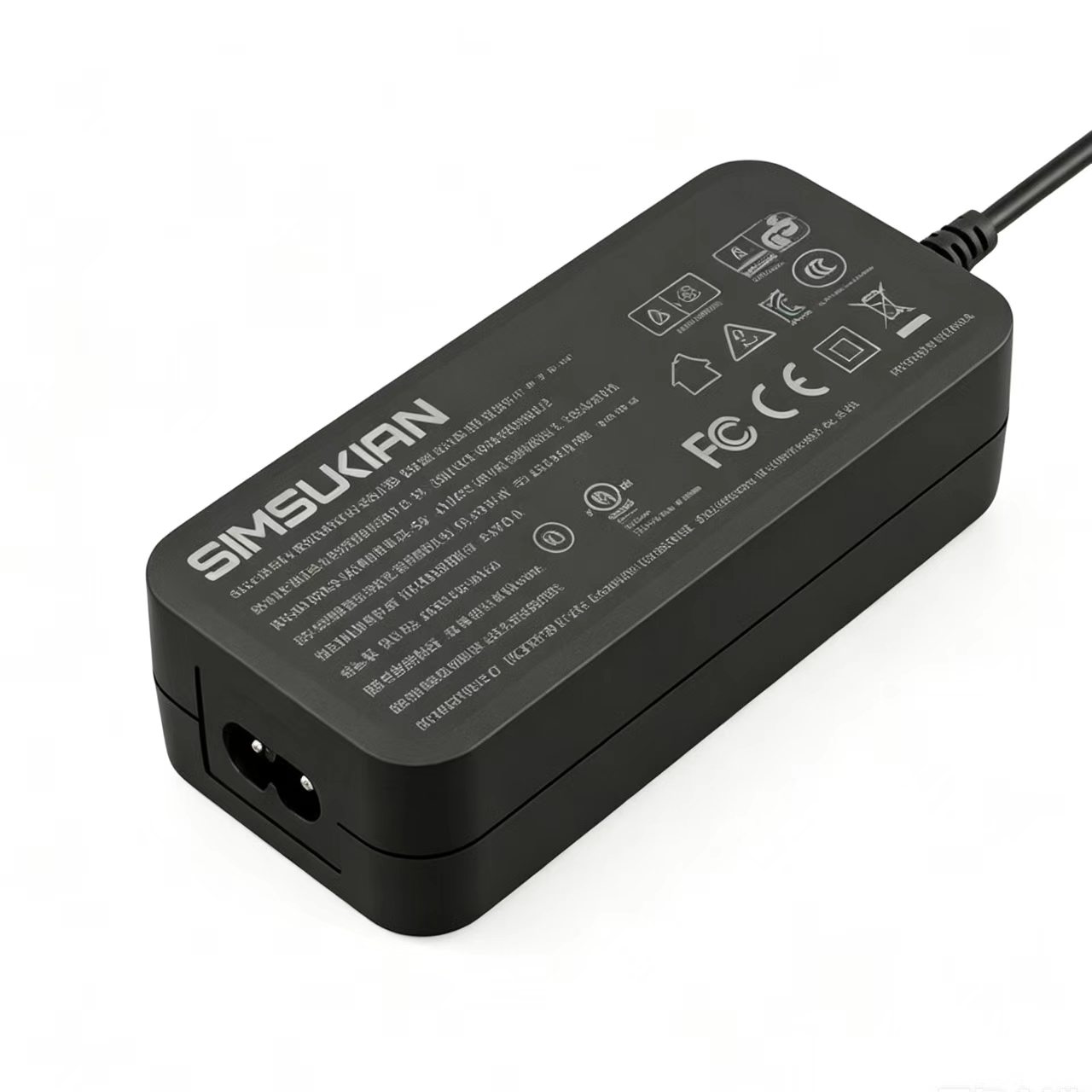
Calculate continuous power first, then check the peak duration. For a device rated 12V/2A with an inrush peak of 3A lasting 200ms, selecting a 36W adapter will place the dynamic response and overcurrent protection threshold at a critical state. The common practice is to multiply continuous power by 1.2 and verify that the peak value stays below the overcurrent protection point; in this case, upgrading to the 60W (12V/5A) grade is recommended. Power margin also determines temperature rise: for 65W output, internal loss is approximately 8.9W at 88% efficiency and drops to 5.7W at 92% efficiency. When the ambient temperature exceeds 40°C, derating to 80% of the rated power is standard practice for desktop power adapters operating long-term inside enclosed cabinets. The nameplate rated power and derated usable power of desktop power adapters shall be marked separately.
2. Voltage Criterion: Tolerance, Line Loss and Remote Sensing Compensation
Most datasheets specify an output voltage tolerance of ±5%, yet the voltage actually received by the load is reduced by line loss. Taking 18AWG cable as an example, its resistance is approximately 21 mΩ per meter. A 1.5m trailing cable forms a round-trip resistance of roughly 63 mΩ, generating a voltage drop of about 0.13V at 2A load, accounting for 1.1% of the 12V output. At 3A load, the voltage drop approaches 0.19V. When desktop power adapters are equipped with long cables or terminal block outputs, solutions include switching to 16AWG conductors, adding remote voltage sensing, or fine-tuning the factory output voltage to 12.3V for compensation. For adjustable-voltage models, confirm the upper voltage limit does not exceed the withstand voltage of downstream equipment, and verify that ripple and efficiency remain within specifications after voltage adjustment.
3. Connector Criterion: DC Plugs, Aviation Plugs and Cable Service Life
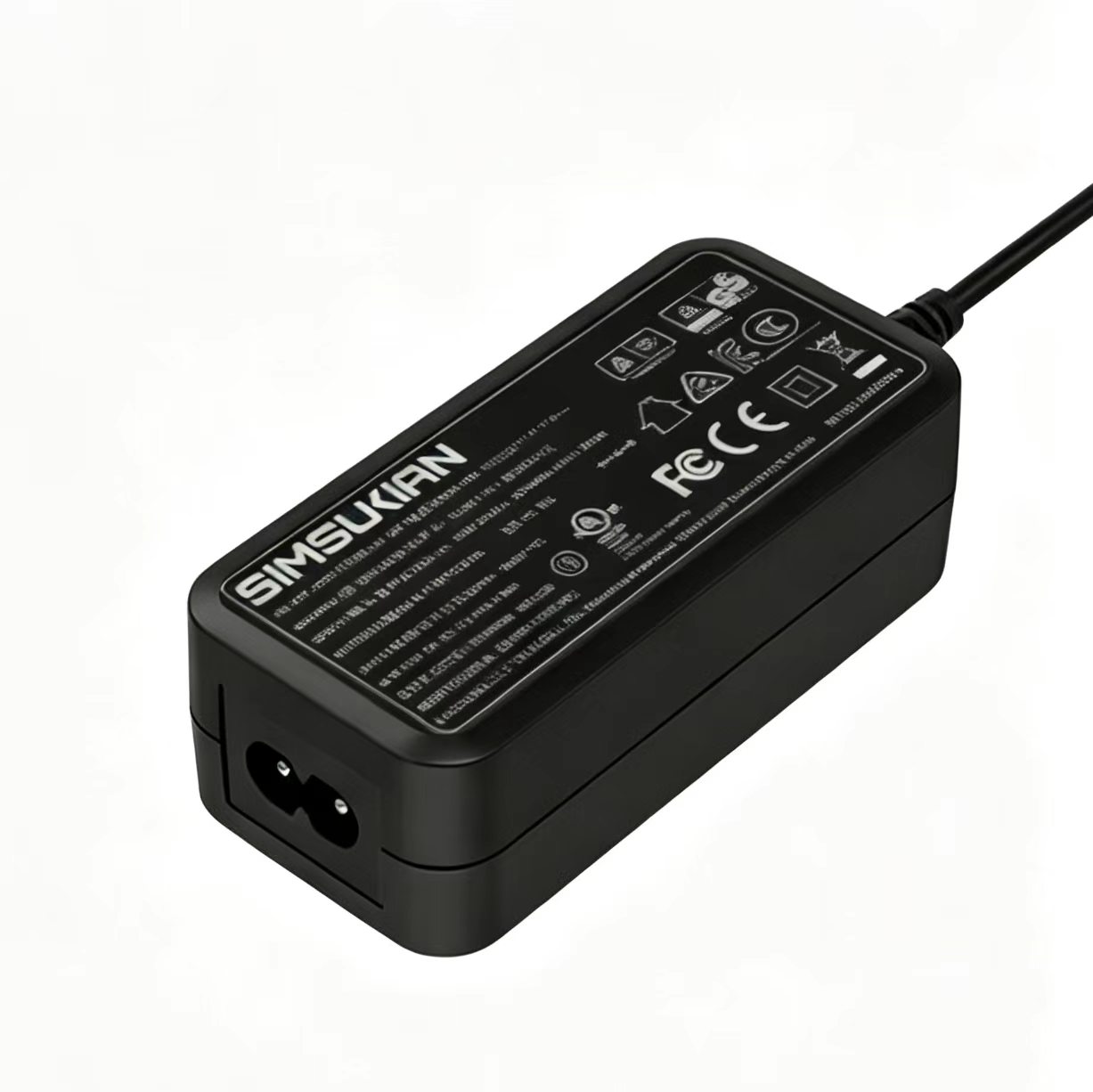
5.5×2.1mm and 5.5×2.5mm DC barrels are mainstream DC connector specifications, typically center-positive and sleeve-negative. Lockable aviation plugs or terminal blocks are widely adopted in industrial control and security applications to prevent disconnection caused by vibration. DC barrel plugs have a typical mating life of around 5,000 insertions and removals and should be classified as consumables for frequently plugged scenarios. The main difference between desktop adapters and wall-plug adapters lies in form factor: an independent housing with power cord or IEC inlet provides more sufficient heat dissipation space, and supports multi-output and terminal block expansion. The flame retardancy rating of the desktop adapter housing must match the requirements of the end-product certification; housing replacement counts as a critical component change.
4. Energy Efficiency & Certification Criterion: Embed Limit Values into Selection Sheets
Energy efficiency is a fixed column in the selection sheet. US DOE Level VI specifies the average efficiency formula for single-output AC-DC power supplies rated 1W–49W: 0.071×ln(P)−0.0014×P+0.67. For 36W units, the calculated efficiency requirement is approximately 87.4%. Units above 49W are subject to a minimum efficiency of 88.0%, with no-load power consumption capped at 0.10W and 0.21W respectively. EU Regulation (EU) 2019/1782 has enforced the same set of no-load limits since April 1, 2020. China’s GB 20943-2025 will take effect on February 1, 2027, superseding GB 20943-2013 with expanded coverage. Certification scheduling for desktop power adapters is recommended to commence 8–12 weeks before mass production. The bill of critical components shall be consistent with end-product certification filings. Energy efficiency test data of desktop adapters shall be archived by batch for customer audits and bidding documentation.
5. Consistency Criterion: Performance Gap Between Samples and Mass Production
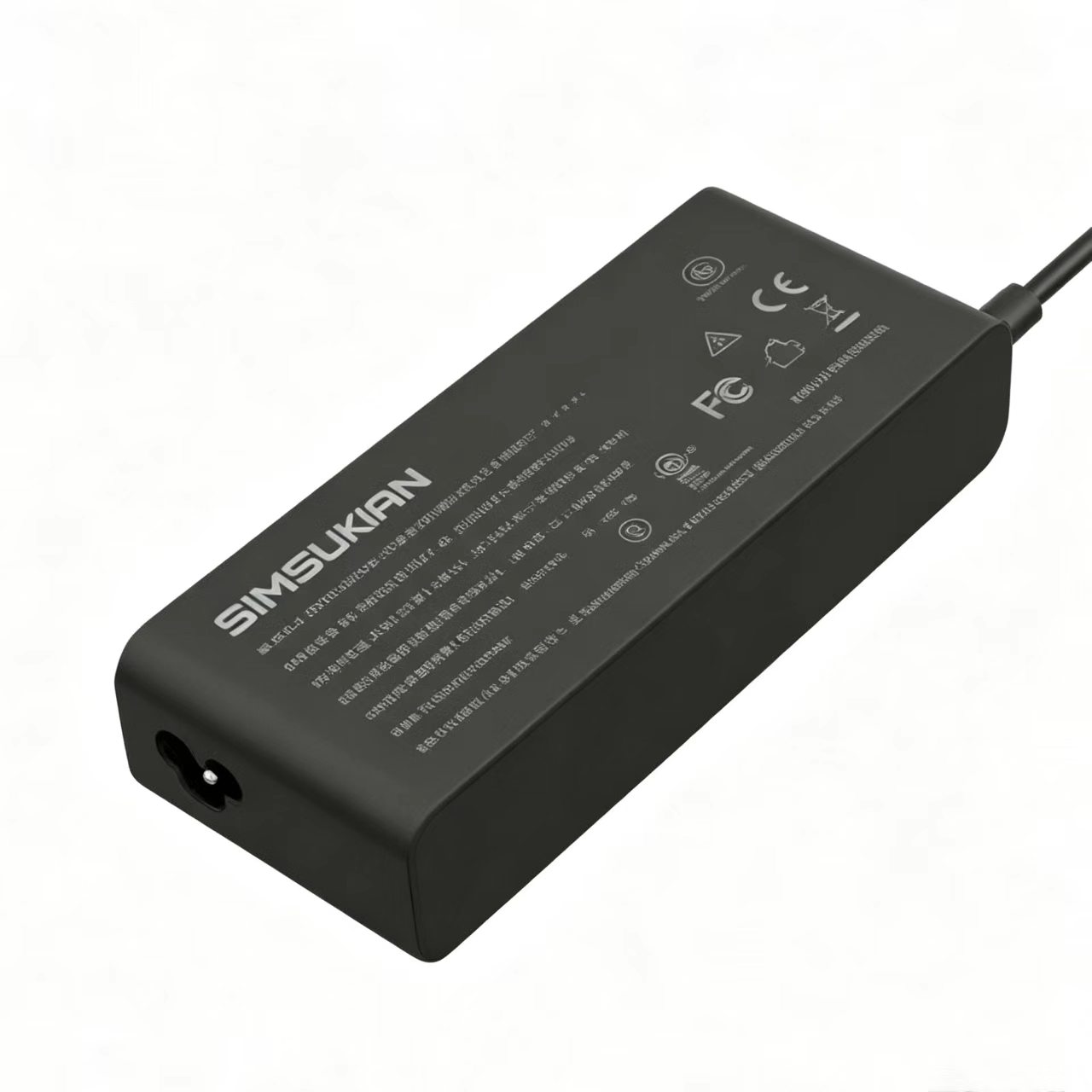
Sample performance does not equal mass delivery performance. Verifiable check items include: full-load burn-in testing covering all shipments with a minimum duration of 2 hours; efficiency deviation within 1 percentage point for the same batch; output voltage deviation within ±2%; sampling for -20°C to 65°C temperature cycling and damp heat testing. B-side purchasers often overlook change management: after replacing capacitors, transformers or rectifiers, temperature rise and EMC performance must be revalidated. Reliability of desktop power adapters can be estimated following Telcordia SR-332 under 25°C full-load conditions, with 100,000 hours being a common target. Incorporating reliability requirements into acceptance clauses reduces risks compared with post-failure tracing. Batch traceability records of desktop power adapters shall be included in delivery documents.
Summary
By adding power margin, voltage tolerance, connector type, energy efficiency & certification, and consistency as five columns in the selection sheet, desktop power adapter selection shifts from empirical judgment to verifiable calculation. Founded in 2008, Shenzhen Simsukian Electronics Technology Co., Ltd. is a Shenzhen Specialized, Refined, Differential and Innovative Enterprise certified to ISO9001:2015 and ISO14001:2015. It covers 3W–240W power ranges and holds CCC, CE, UL, FCC, KC, PSE and other global safety certifications. The company supports B-side customers with selection calculation, sample testing and mass production consistency data.
To verify efficiency, no-load consumption and certification lists for specific power grades, contact the Simsukian sales team for desktop power adapter datasheets and test reports, or submit load profiles for one-on-one selection evaluation.
Q&A
Q1: Can a 60W desktop power adapter drive a device with a 75W peak load? A: Long-term use under this condition is not recommended. Per the criteria above, continuous power ×1.2 serves as the selection baseline, and the peak must stay below the overcurrent protection threshold. If the peak exceeds the rated value, confirm the peak duration and protection threshold, or upgrade to a higher power rating directly.
Q2: What precautions apply when extending the output cable to 3 meters? A: Referring to the line loss calculation above, 18AWG cable has a resistance of ~21 mΩ per meter. A 3m round-trip cable gives approximately 126 mΩ, creating a voltage drop of ~0.25V at 2A load, nearly half of the ±5% tolerance band for a 12V output. Switching to 16AWG cable or implementing remote sensing is advised.
Q3: What are the limit values for no-load power consumption? A: Per DOE Level VI and (EU) 2019/1782: ≤0.10W for units ≤49W; ≤0.21W for units >49W.
Q4: Can a 12V device use an adjustable-voltage adapter? A: Yes, provided the upper adjustment limit does not exceed the withstand voltage of the downstream device, and ripple and efficiency are rechecked after voltage adjustment.
Q5: What indicators shall be checked for mass production consistency? A: Full-load burn-in for all shipments (minimum 2 hours), batch efficiency spread ≤1 percentage point, batch output voltage spread ≤±2%, plus sampling inspection for temperature cycling and damp heat.
Source of Data: GB 20943-2025 issued by the Standardization Administration of China (released Jan 24, 2025, effective Feb 1, 2027); US DOE 10 CFR 430 Subpart B Appendix Z (DOE Level VI) efficiency formula and no-load limits; European Commission Regulation (EU) 2019/1782 Annex II; Telcordia SR-332 Reliability Prediction Procedure; typical industry resistance value of 18AWG conductors; public materials of Simsukian.
Power adapter
Power adapter
Related Articles More>>
- Tensile and Mechanical Strength Test Analysis of Conversion Pin Adapter
- Influence of Output Ripple Noise of Plug-in Power Adapter on Precision Terminals
- High-Altitude Derating and Pressure Environment Parameters of power adapter
- USB Charger | 5V Fixed-output USB-A Specs, Device Detection & IoT Sourcing Guide